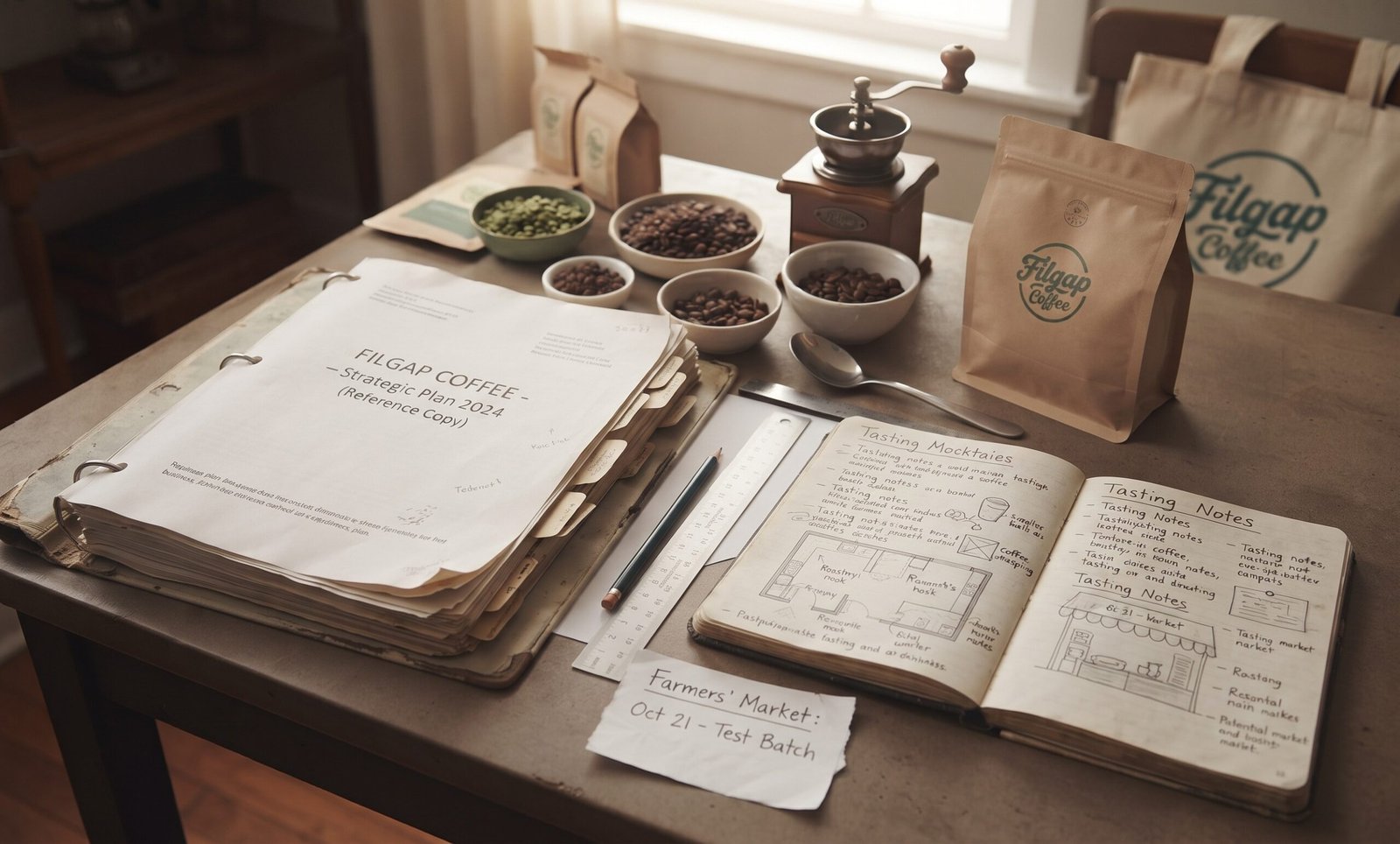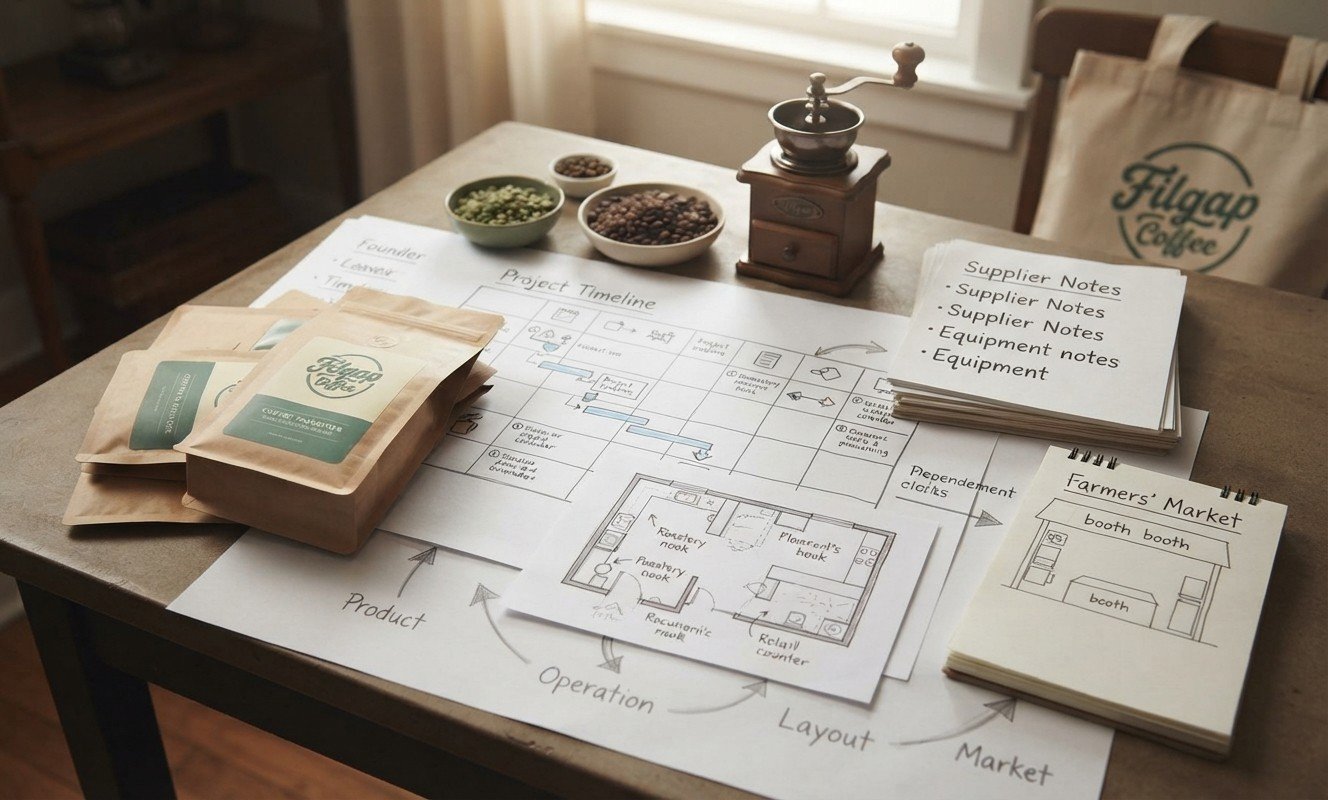
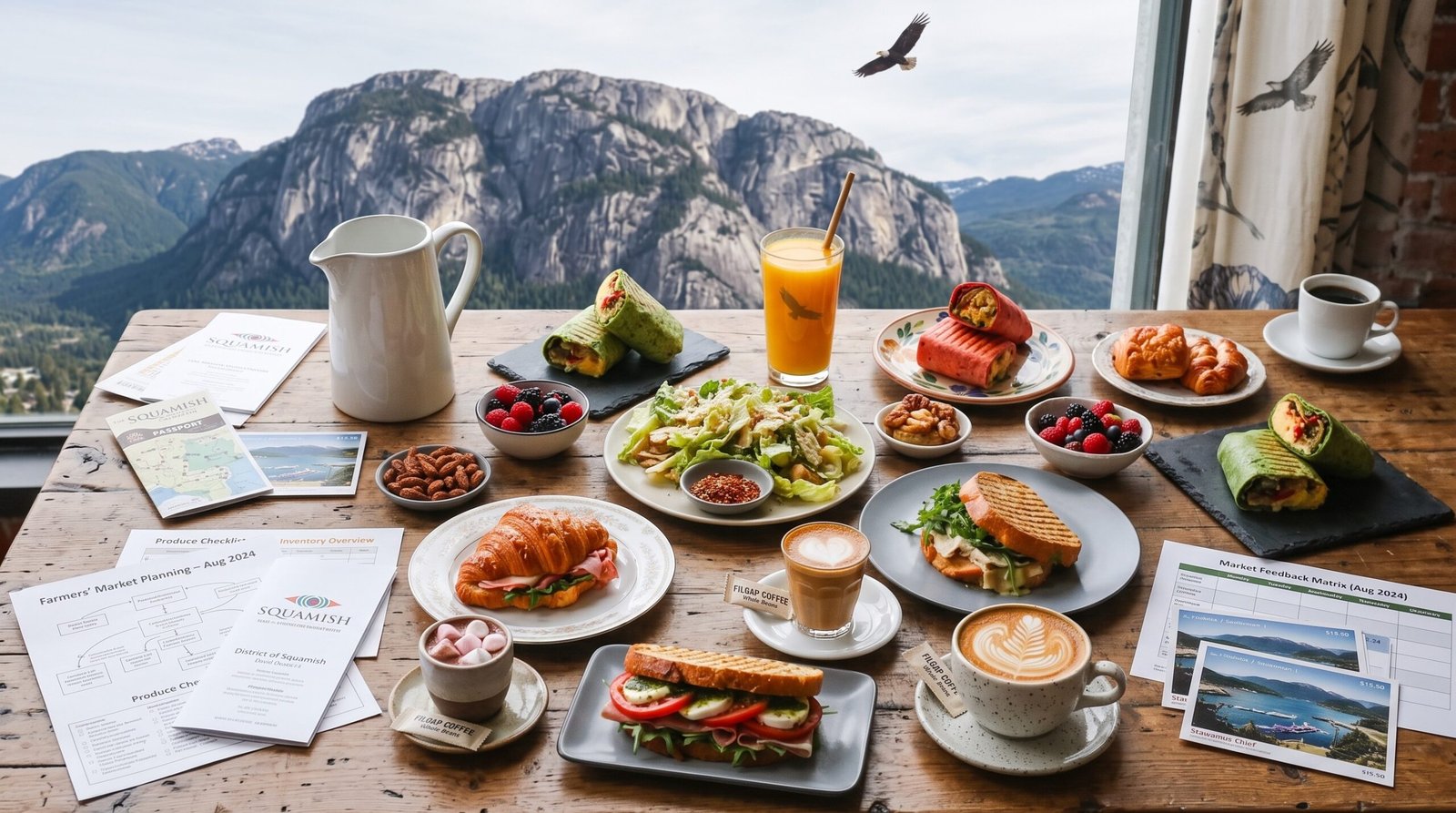
In the 2024 business plan for Filgap Coffee, I divided the menu into eleven product categories.
- Coffee.
- Non-coffee drinks.
- Smoothies.
- Frappes.
- Soft ice cream.
- Breakfast.
- Lunch.
- Bakery.
- Whole beans.
- Retail products.
- Grab-and-go food.
Looking at that list now, it would be easy to think I was simply trying to sell as many things as possible.
That was not really how I saw it.
At the time, I thought I was designing a reasonably complete coffee shop.
And there were good reasons for wanting variety.
Customers do not all come for the same reason
Some people come for coffee.
Some want coffee and breakfast.
Some are meeting a friend and want somewhere to sit for a while.
Later in the day, someone may want something sweet.
Then there are groups.
One person wants coffee.
Another does not drink coffee.
Someone else is hungry.
A child may want something completely different.
That creates a practical problem.
If only one person in the group can find something they want, the whole group may decide to go somewhere else.
The same thing happens naturally in restaurants. People sit at the same table, but they do not all order the same meal.
A coffee shop is different from a restaurant, but customer choice still matters.
That was part of my thinking in 2024.
I wanted enough variety that different people could use the same place for different reasons.
There was also a broader pattern I had seen in the coffee business.
Many coffee shops do not stop at coffee.
Coffee leads to pastries.
Pastries lead to breakfast.
Then customers want something sweet in the afternoon.
Someone notices that people are buying ice cream somewhere else.
Someone else notices that customers want a quick lunch.
Little by little, businesses begin serving needs that used to belong to another type of business.
Large coffee chains are probably the clearest example.
They are still coffee businesses, but over time many of them have also become places to buy breakfast, snacks, bottled drinks, sweets and other convenient food.
It is easy to understand the logic.
If your customer buys coffee from you and then goes somewhere else for the next thing they need, eventually you start wondering whether you should sell that too.
The difficult question is where to stop.
At the time, I thought I had found the right balance
When I made the 2024 plan, I did not think the menu was too large.
I thought it was close to optimal.
There would be enough choice to serve different customers and different parts of the day, while still fitting within a space and operation I believed could be managed efficiently.
That is worth remembering.
Complex businesses are not always created because someone decided:
Let’s make this complicated.
Complexity can arrive through a series of decisions that each make sense on their own.
A customer wants something.
The product fits the market.
The numbers appear to work.
So you add it.
Then you find out that you did not just add one menu item.
You added another operation.
I had already experienced this in an earlier coffee business.
Soft-serve ice cream is one example I remember clearly.
A successful product can still create a lot of work
We developed a soft-serve product that I thought tasted very good.
I also believed there was a real market for it.
We tested it first in a small number of locations.
The response gave us enough confidence to expand it more broadly.
And commercially, it worked.
Sales increased.
But the ice cream did not simply appear on the menu.
The machine needed somewhere to go.
That sounds easy until a shop has already been laid out efficiently.
If you designed the back of the house properly in the first place, there should not be a lot of unused space waiting for the next piece of equipment.
So finding room for a new machine can mean changing an operation that was already working.
Then employees have to learn how to use it.
The product creates a new type of waste.
The mix needs refrigeration.
When sales become stronger than expected, the refrigeration capacity that was enough before may no longer be enough.
Some locations may need additional cold storage.
And then there is cleaning.
A soft-serve machine needs careful daily cleaning. It is a food-safety issue, not something you can casually leave until tomorrow.
That adds work at closing.
Closing takes longer.
Someone has to do it.
The equipment itself may be the easier part.
Changing people and routines can be harder.
Employees need training.
They need to understand why the change is being made.
And sometimes the change affects how they think about their own work.
A barista who joined because they wanted to focus seriously on coffee may eventually wonder why so much of their work is connected to something else.
That does not mean adding soft serve was a bad decision.
It was successful.
The additional sales helped justify the additional work.
But that experience left me with an important distinction.
A product can be commercially successful and still make the business significantly harder to operate.
Both things can be true at the same time.
Fresh food creates a different kind of problem
Sandwiches taught me something else.
A fresh sandwich can make a coffee shop much more useful.
Someone who needs breakfast or lunch now has another reason to choose the same place.
But the product creates a timing problem.
If you wait until the customer orders and then begin everything from the start, service can become too slow.
So some preparation has to happen before the order arrives.
Now the question becomes:
How much should I prepare?
Too little and you lose sales.
Too much and you create waste.
With fresh food, anything left at the end of the day can become a real loss.
So the product needs enough consistent demand to support the operation behind it.
I remember that being one of the harder parts when we expanded sandwich offerings in an earlier business.
It was not enough to add the product.
We had to bring sales up to a level that made the product operationally sensible.
Products purchased from outside rather than made from basic ingredients in-house can create another pressure.
There may be less margin available from the beginning.
Waste becomes even more painful.
A selling price can look attractive.
The product can look attractive.
But neither tells you what the item is really doing to the business.
The menu starts designing the rest of the business
This is one of the things I think about differently now.
A menu is not only a list of things customers can order.
It starts making decisions elsewhere.
Add a product.
You may need another machine.
The machine needs space.
The ingredients need storage.
Maybe refrigeration.
Someone needs to prepare it.
Someone needs to learn it.
Someone needs to clean it.
Someone needs to order the ingredients.
Someone needs to manage the waste.
If the existing team cannot absorb the work, you may need more labour.
More labour changes the economics.
More equipment and preparation can require more space.
More space can mean more rent.
And then the business needs more sales to support everything that was added.
The connection is not always obvious when you are looking at one new product.
But the chain can become long.
Menu → equipment → space → people → cost → required sales.
That is why I no longer think about a menu item only by asking whether customers might buy it.
I also want to know what kind of business I am agreeing to build in order to sell it.
But a small menu is not automatically better
There is an easy overcorrection here.
I could look at all that complexity and say:
Keep the menu as small as possible.
Just serve coffee.
Operationally, that has obvious advantages.
Less inventory.
Less waste.
Less equipment.
Less training.
Fewer things to clean.
More attention available for coffee.
If coffee alone could create enough customer value and support a healthy business, that simplicity would be very attractive to me.
But a business is not designed only for the operator.
Customers have their own needs.
A family may come in together.
Someone may not drink coffee.
Someone may want something to eat.
Two people may want to meet, but one of them needs breakfast before work.
If the business is wonderfully efficient but does not work for the people trying to use it, that simplicity has not solved much.
So I do not think the goal is:
How small can I make the menu?
And I do not think it is:
How many things can I fit on the menu?
The question I find more useful now is:
What actually belongs here?
The answer also affects what people think the business is
There is another side to menu design that is less operational.
The menu tells people what kind of place they are in.
That perception can form quickly.
A place where nearly all the attention is on coffee feels different from a place where coffee, breakfast, lunch, desserts, ice cream and many other things compete equally for attention.
Neither model is automatically wrong.
But they are different businesses.
Employees notice this too.
Someone may join because they want to work in a serious coffee-focused environment.
If the operation gradually becomes more and more focused on food and other products, their understanding of the business can change.
I have seen how difficult it can be to change the first perception of what a business is.
That makes the early menu more important than it first appears.
It is not only describing what customers can buy.
It is helping define what they think the business is for.
For Filgap, I want that answer to begin with coffee.
I know one warning sign
Coffee quality needs more attention than the customer usually sees.
Good green coffee matters.
Roasting matters.
Grinding and extraction matter.
But quality control continues after that.
Equipment has to be kept clean.
Work areas have to be maintained.
Recipes need attention.
Conditions change.
Someone needs enough time and concentration to notice when something begins to drift.
If the rest of the menu becomes so demanding that those basic things repeatedly receive less attention, I would see that as a warning.
The business is beginning to lose focus on the thing it is supposed to do well.
One answer is to add people.
More labour can protect quality.
But more labour also increases cost.
Then the additional menu has to support that cost.
That balancing work is part of management.
The question is not simply whether one more product can be made.
It is whether the whole system still works after it is added.
I do not know the final Filgap menu yet
For a future Filgap roastery and tasting room, I would still prefer coffee to remain the centre of the room.
That part feels clear to me.
The rest is not completely decided.
If the business could concentrate mainly on coffee and still work well for customers and financially, I would like the operational simplicity that comes with that.
At the same time, I find it difficult to imagine a customer-facing coffee space with no supporting choices at all.
Not everyone drinks coffee.
Tea and chocolate feel like natural basics to me.
There may also be room for another type of drink that serves a different need from coffee.
Food is something I want to think about more carefully.
Something simple that pairs naturally with coffee makes sense to me.
How much beyond that depends on questions I cannot answer yet.
The location.
The size of the space.
The surrounding businesses.
The customers who actually use that particular area.
Even within Squamish, the right combination may not be identical everywhere.
That is why I do not want to design a final menu before I understand the place it has to work in.
Three things would come first for me now
If I were deciding whether a product belonged on the menu, I would start with three questions.
Does it fit with the coffee?
It does not have to contain coffee.
It does not even have to be a drink.
But it should make sense beside the main reason the business exists.
Can we do it well?
This matters a lot to me.
Excellent coffee beside a product that is not good enough does not improve the experience.
If we cannot make or serve something at a quality I am comfortable with, I do not think it belongs simply because customers expect a longer menu.
And then:
Do the customers here actually want it?
Not customers in theory.
Not because a large chain sells it.
Not because another café has it.
The customers using this particular place.
Those three questions still are not enough.
After them comes the operational question.
What does the product require?
Space?
Equipment?
Preparation?
Training?
Labour?
Storage?
Waste?
Cleaning?
Attention?
The answer does not always have to be “very little.”
Soft serve taught me that too.
Sometimes a product creates a lot of additional work and is still worth doing.
But I want to understand that work before I say yes.
Everything on the menu should earn its place
When I look back at my 2024 plan, I do not think the broad menu was a foolish idea.
The reasoning behind it still makes sense to me.
Customers are different.
They come at different times.
They come with different people.
They want different things.
A useful business has to pay attention to that.
What has changed is the way I think about the other side of the decision.
Every solution has a cost.
Not only an ingredient cost.
An operational cost.
A space cost.
A labour cost.
An attention cost.
And sometimes an identity cost.
For Filgap, coffee still needs to remain the centre.
That does not necessarily mean coffee has to stand alone.
It means anything I put beside it should have a reason to be there.
A menu is probably not finished because there is nothing else I could add.
It may be finished when everything on it has earned its place.