When I picture Filgap Coffee a few years from now, I do not start with a row of coffee shops.
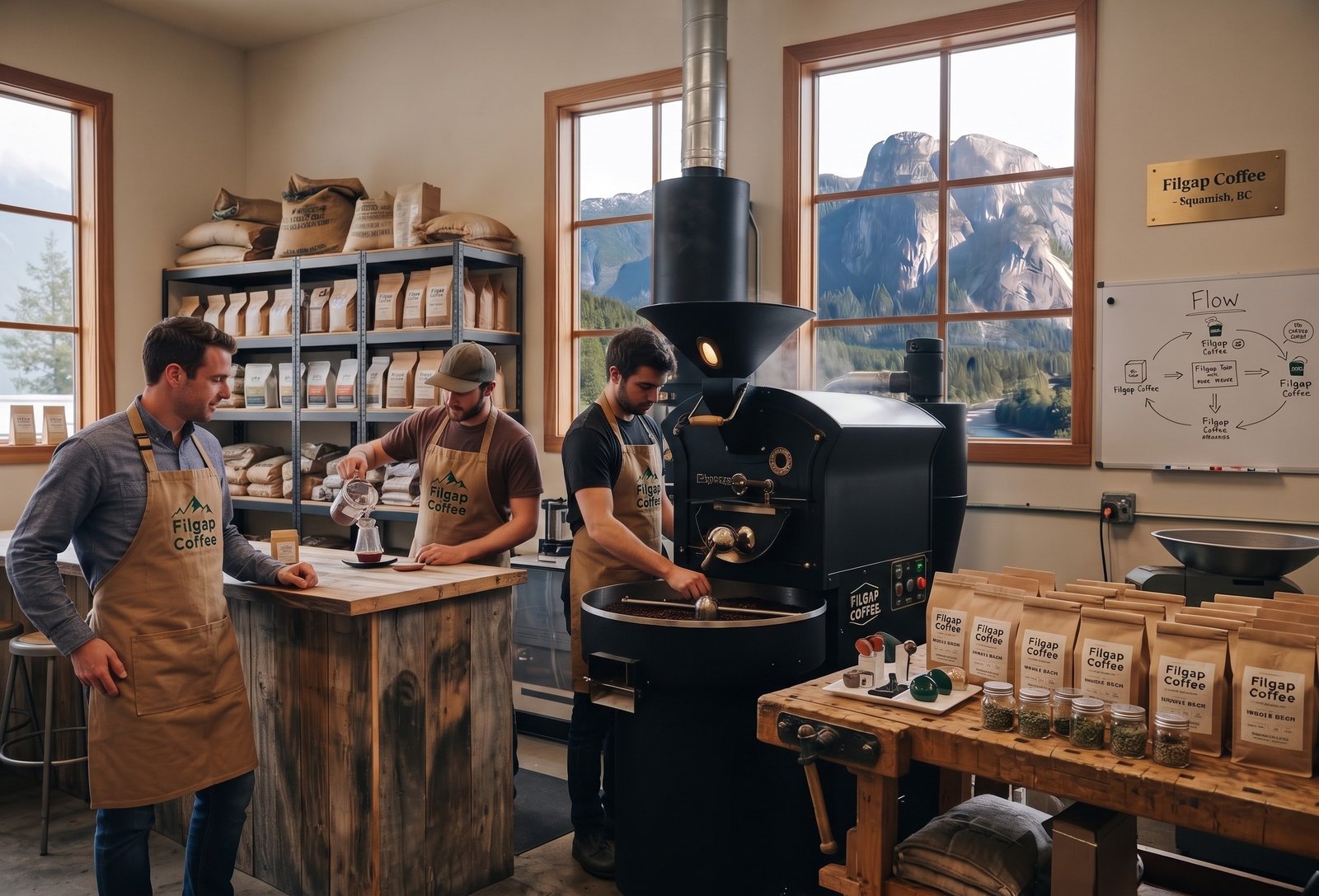
I start with a roastery.
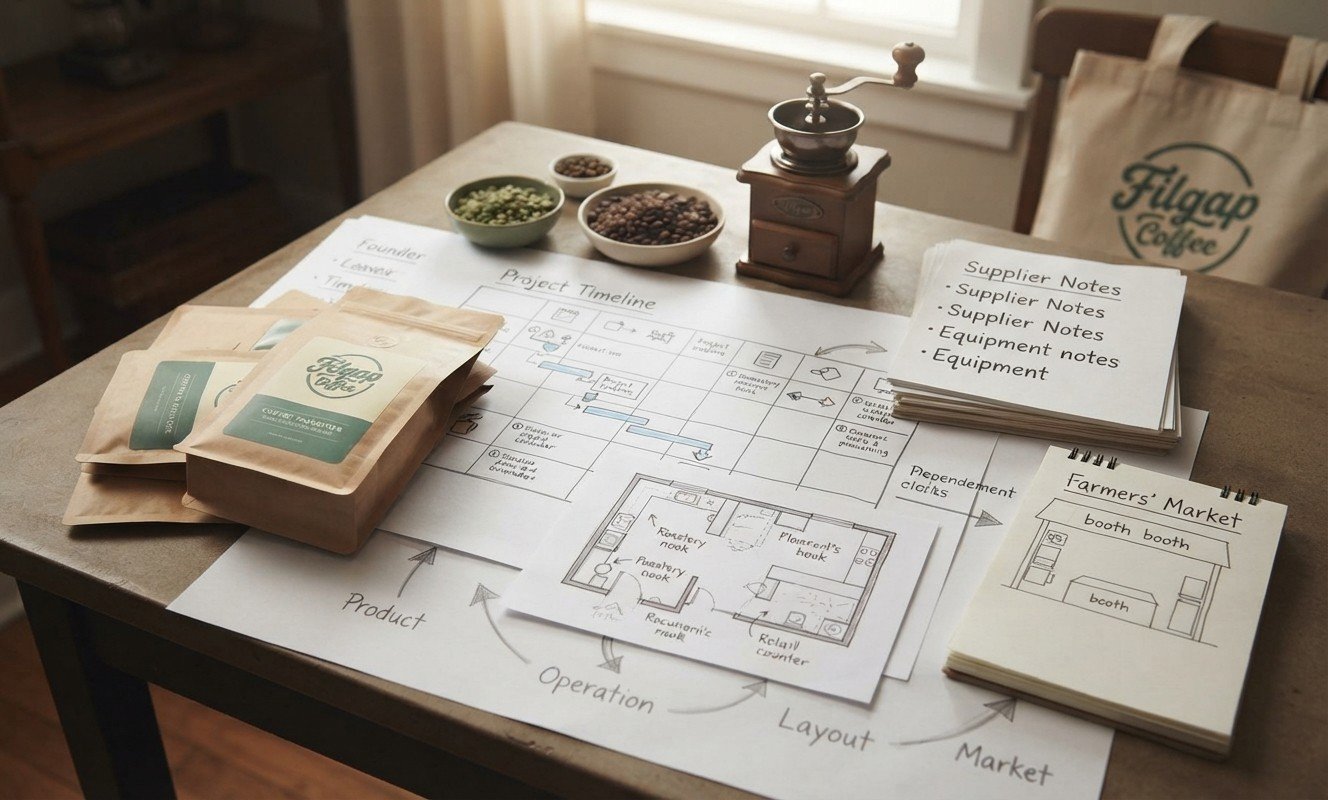
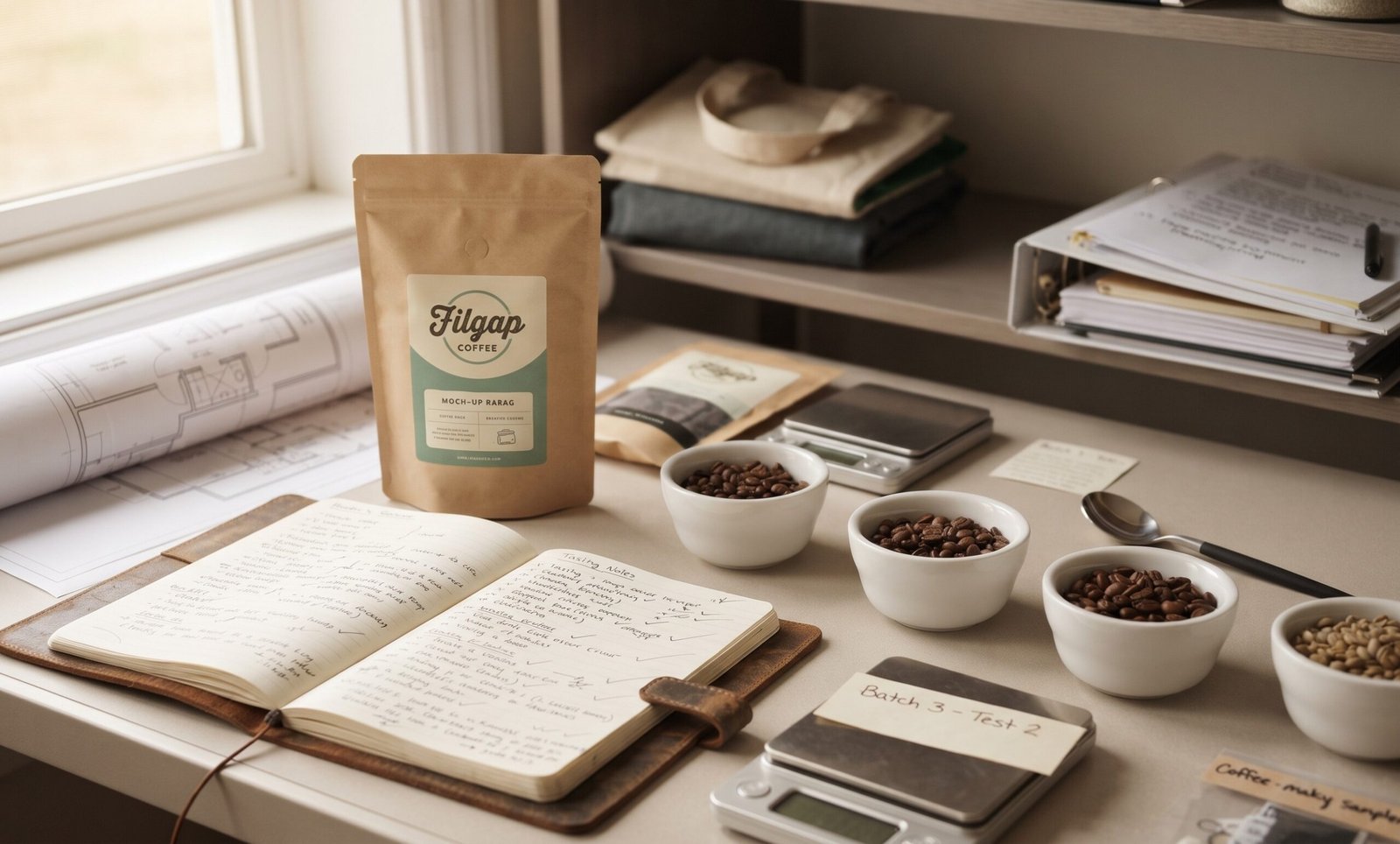
Coffee being roasted in Squamish. Bags leaving the roastery and going home with people. Some being sold directly. Perhaps some eventually going to other businesses. And beside the roasting work, a small tasting room where people can try the coffee and understand what they are taking home.
That picture makes one decision fairly clear to me.
Whole-bean coffee needs to sit at the centre of the business.
Not because everyone should make coffee this way.
They should not.
And not because Filgap should never make other coffee products.
It probably will.
Whole bean is central because it connects the things I want the business to become good at: roasting, flavour, freshness, repeat purchasing and a relationship with people that continues after they leave the room.
I want the roastery to be the business
A coffee shop and a roastery can both be good businesses, but they grow in different ways.
A coffee shop depends heavily on what can happen inside a particular location. There are only so many people who can come through the door, so many drinks that can move across the counter and so much activity one physical room can handle.
If the business wants to grow beyond that, another location may eventually become part of the answer.
For Filgap, I am more interested in another possibility.
A bag of coffee can leave the room.
Someone can buy it directly and drink it at home for the next week or two.
Someone else could eventually order another bag without coming to the tasting room.
A future wholesale customer might use coffee roasted in the same place without requiring Filgap to build another customer-facing shop.
The tasting room can still be important without being the only place where the business happens.
That is attractive to me.
I want the room to support the coffee. I do not want the reach of the coffee to be limited by the size of the room.
The customer finishes the process
A prepared cup and a bag of whole beans do different jobs.
When a trained barista makes a coffee, most of the process is completed before the customer receives it.
The coffee has been selected.
Roasted.
Ground.
Measured.
Extracted.
The customer experiences the result.
Whole bean is different.
Filgap can choose good green coffee and roast it carefully, but after the bag leaves, part of the final result belongs to the person who bought it.
They grind it.
They choose how to brew it.
Espresso machine.
Drip brewer.
French press.
AeroPress.
Something else.
That can sound like a lot of work if you do not already make coffee that way.
For someone who does, it can feel completely normal.
My own morning coffee usually takes less than five minutes. Once the routine becomes familiar, grinding the beans and brewing the coffee feels less like work and more like part of starting the day.
It reminds me a little of cooking.
Some people only care about the meal.
Others enjoy making it too.
Whole-bean coffee gives the customer some ownership of the final experience.
That also creates a responsibility for the roaster.
The coffee still has to work when I am not there to make it.
The tasting room has a different job
This is one reason a tasting room still matters to me even if whole bean becomes the main product.
Coffee can change a lot in the final preparation.
Good green coffee and careful roasting create the foundation, but poor brewing can still hide much of what was good about it.
A tasting room can give someone a reference point.
This is what this coffee can taste like when it is prepared carefully.
Then we can talk about it.
Maybe compare coffees.
Maybe explain a simple brewing adjustment.
Maybe the customer simply tastes something they like and takes the bag home.
That is enough.
I do not mainly imagine the tasting room as a place designed to move as many prepared drinks as possible across a counter.
I imagine it as part of the relationship between the roastery, the coffee and the people who drink it.
The prepared cup matters.
The bag continues the experience.
I have seen what visible roasting can do
In an earlier coffee business, we had locations supplied by a central roasting facility and locations where customers could actually see coffee being roasted.
In my experience, the locations with visible roasting sold more whole-bean coffee.
There could have been several reasons for that, so I would not reduce the difference to one simple cause.
But what I saw made sense to me.
People could see the coffee being made.
They could smell the roasting.
The machine, the process and the packaged beans all belonged to the same picture.
The bag on the shelf was no longer just another packaged product that had appeared from somewhere else.
There was a visible connection between how it was made and what the customer was buying.
That experience has stayed with me.
It is one reason I keep imagining roasting as something that should remain close to the customer rather than disappearing completely into the back of the business.
Variety without leaving the centre
Making whole bean the core product does not mean selling one coffee forever.
I want Filgap to have a signature blend.
Blending can create something an individual coffee may not provide on its own. One coffee may bring a flavour I like, while another contributes body, sweetness or balance.
For espresso in particular, I like the possibility of building those qualities together.
I also want room for single-origin coffees.
Some people find one coffee they like and happily buy it again.
Others want to explore.
Different origins.
Different varieties.
Different processing.
Different expressions in the cup.
Part of the enjoyment is discovering what you prefer.
That variety has another advantage from a business-design point of view.
It can happen inside the same basic operation.
Green coffee → roasting → resting → packaging → selling.
Different coffees still create complexity.
More inventory.
More roast scheduling.
More forecasting.
More decisions about how much of each coffee to carry.
But the complexity stays close to the skill I want Filgap to develop most deeply.
Roasting coffee well.
That matters to me after seeing how easily a menu can pull a coffee business in many different directions.
Freshness is probably the difficult part
Putting whole bean at the centre sounds simple.
Managing it in a way that supports a freshness promise is not.
A roaster works in batches.
Customers do not arrive in batches.
If I roast too little, somebody comes to buy coffee and it is gone.
If I roast too much, time keeps moving even when sales do not.
Early in the business, when I do not yet have stable sales history, that balance may be especially difficult.
How much should I roast?
Which coffee?
How often?
How much inventory should be available without carrying more than I am comfortable with?
Those are operating questions, not marketing language.
Filgap can say that freshness matters.
The harder part is building a production system that makes that statement credible.
That may mean frequent small batches.
It may mean learning the rhythm of repeat customers.
It may mean accepting some inefficiency while demand is still uncertain.
It may also mean deciding that every coffee does not need to be available all the time.
I do not know the exact system yet.
But if freshly roasted coffee is one of the first gaps Filgap wants to work on in Squamish, inventory and roast planning have to support that idea in practice.
Whole bean is not for everyone
There is also a limit I do not want to ignore.
Whole-bean coffee asks something from the customer.
You need a grinder.
You need a brewing method.
You need a few minutes.
You have something to clean afterwards.
For many people, convenience wins.
That is real.
I do not think the answer is to tell those people they are drinking coffee incorrectly.
The first whole-bean customers for Filgap are more likely to be people who already have the habit.
They already grind coffee.
They already brew at home.
They already need another bag when the current one runs out.
Filgap does not have to teach them an entirely new behaviour.
It has to earn a place among the coffees they already choose.
Other formats may eventually help with different moments.
A capsule, for example, could serve someone who values convenience much more on a rushed morning.
That does not necessarily compete with whole bean.
It may solve another version of the same coffee problem.
But I still see whole bean as the place where the roastery begins.
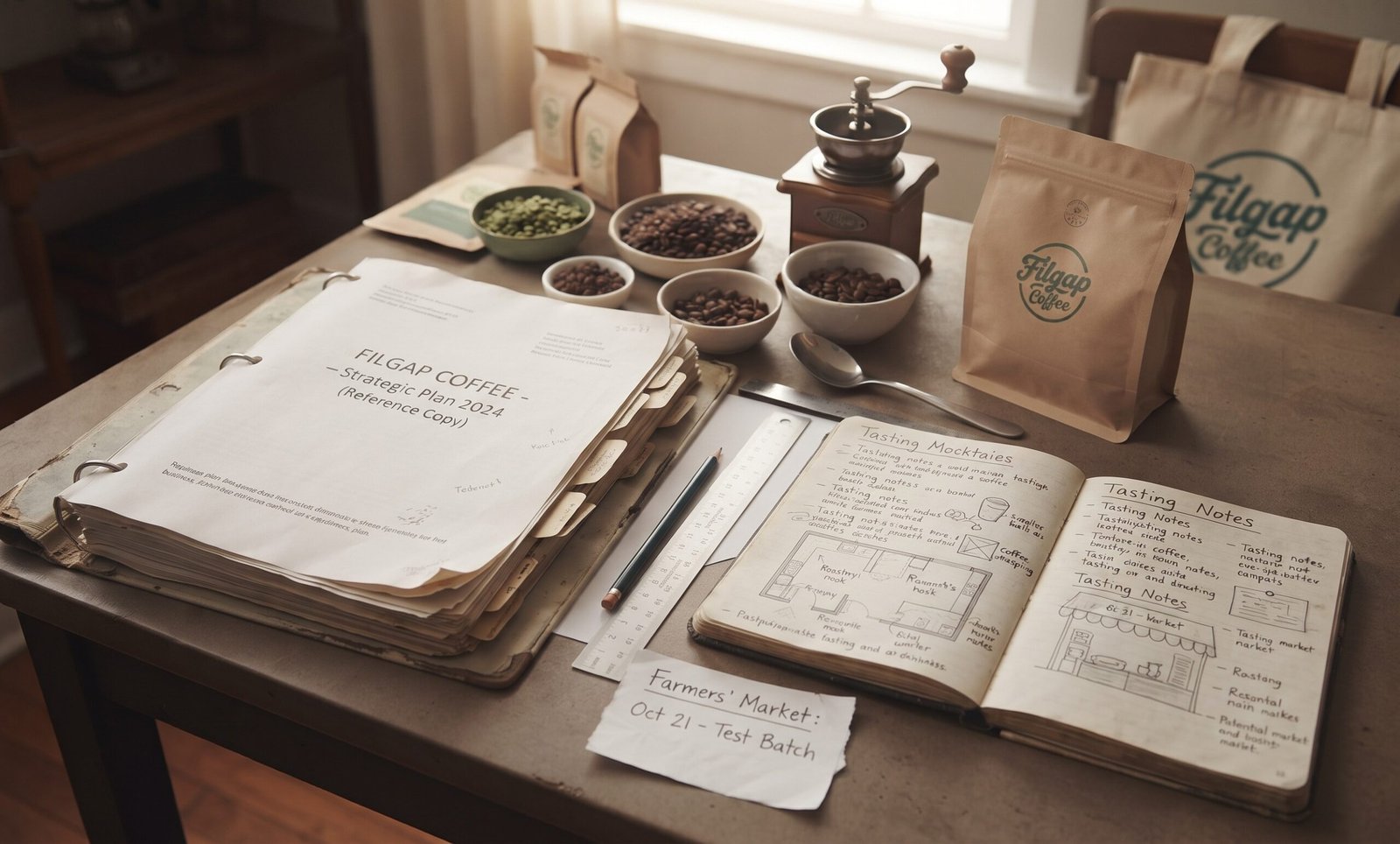
The Farmers’ Market is simply the first place to find out
The Farmers’ Market did not make me choose whole bean as the core product.
It is simply the route I have chosen to begin selling.
Instead of opening a permanent shop first, I can roast coffee, let people taste it, talk with them and see what happens when they have the opportunity to buy a bag.
Then comes the more useful part.
They take it home.
They make it themselves.
Eventually the bag becomes empty.
What happens next?
That is where the model begins to prove itself.
Not when someone says the sample tastes good.
When enough people decide they want another bag.
Building outward from the coffee
When I say whole bean sits at the centre of Filgap, I do not mean only that I hope to sell a lot of it.
I mean it gives the business a centre of gravity.
It is the product I want Filgap to become particularly good at.
It keeps roasting central.
It can represent the brand beyond the tasting room.
It can create a repeated relationship with someone at home.
And it gives the future business room to grow without requiring every coffee experience to happen across a Filgap counter.
Other things can eventually be built around it.
- Prepared coffee.
- A tasting room.
- Different convenience formats.
- Perhaps wholesale relationships.
I do not know yet how large each of those parts will become.
But I know where I want to begin.
Roast good coffee in Squamish. Put it in a bag. Give people a reason to take it home. And make it good enough that, when the bag is empty, they want to come back.