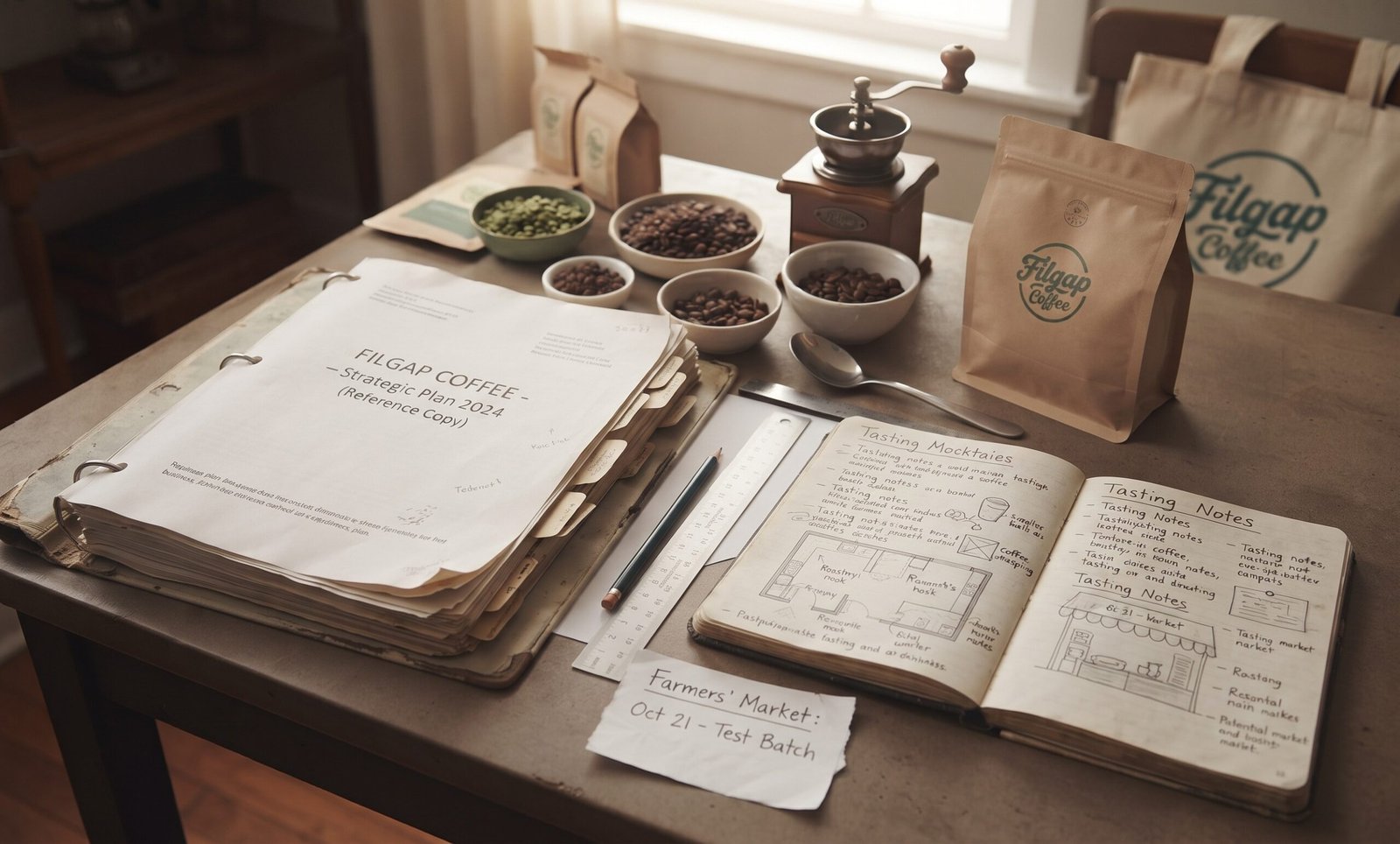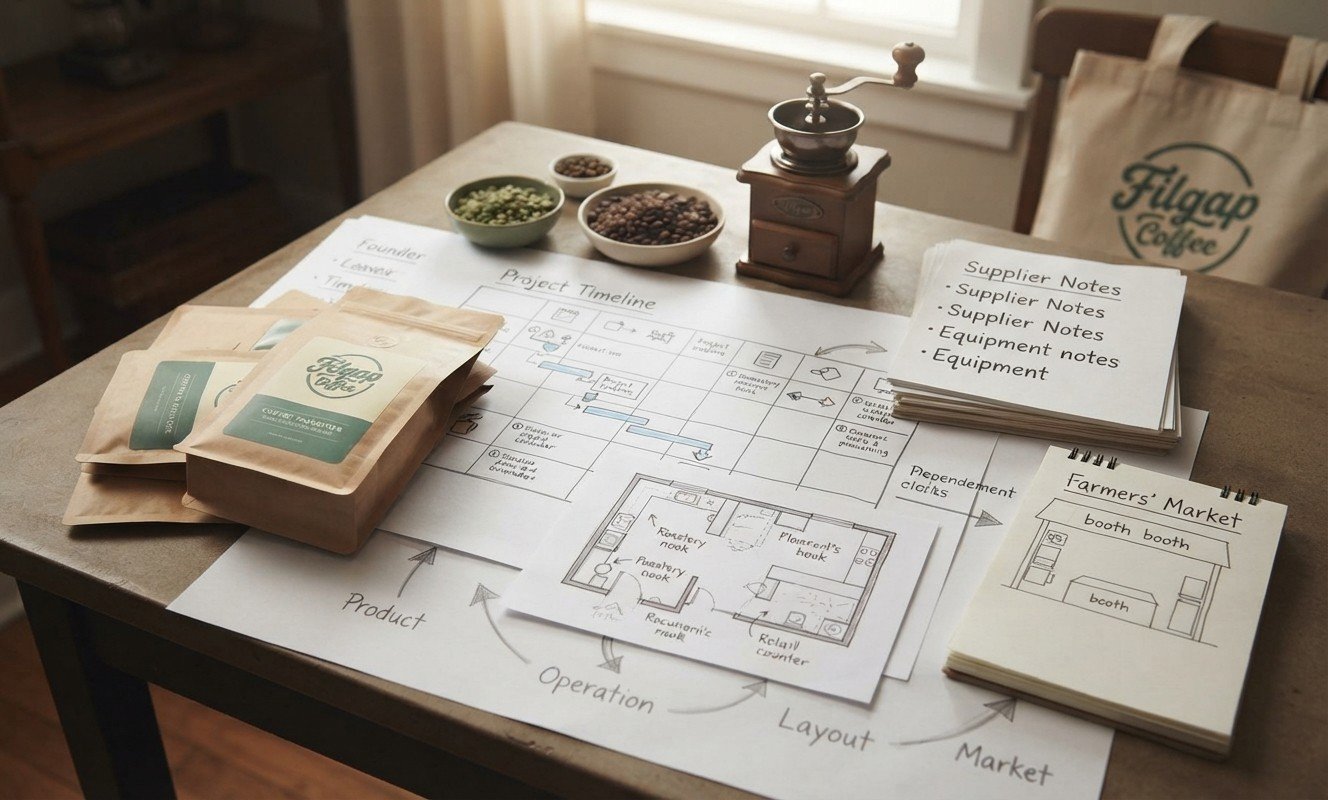
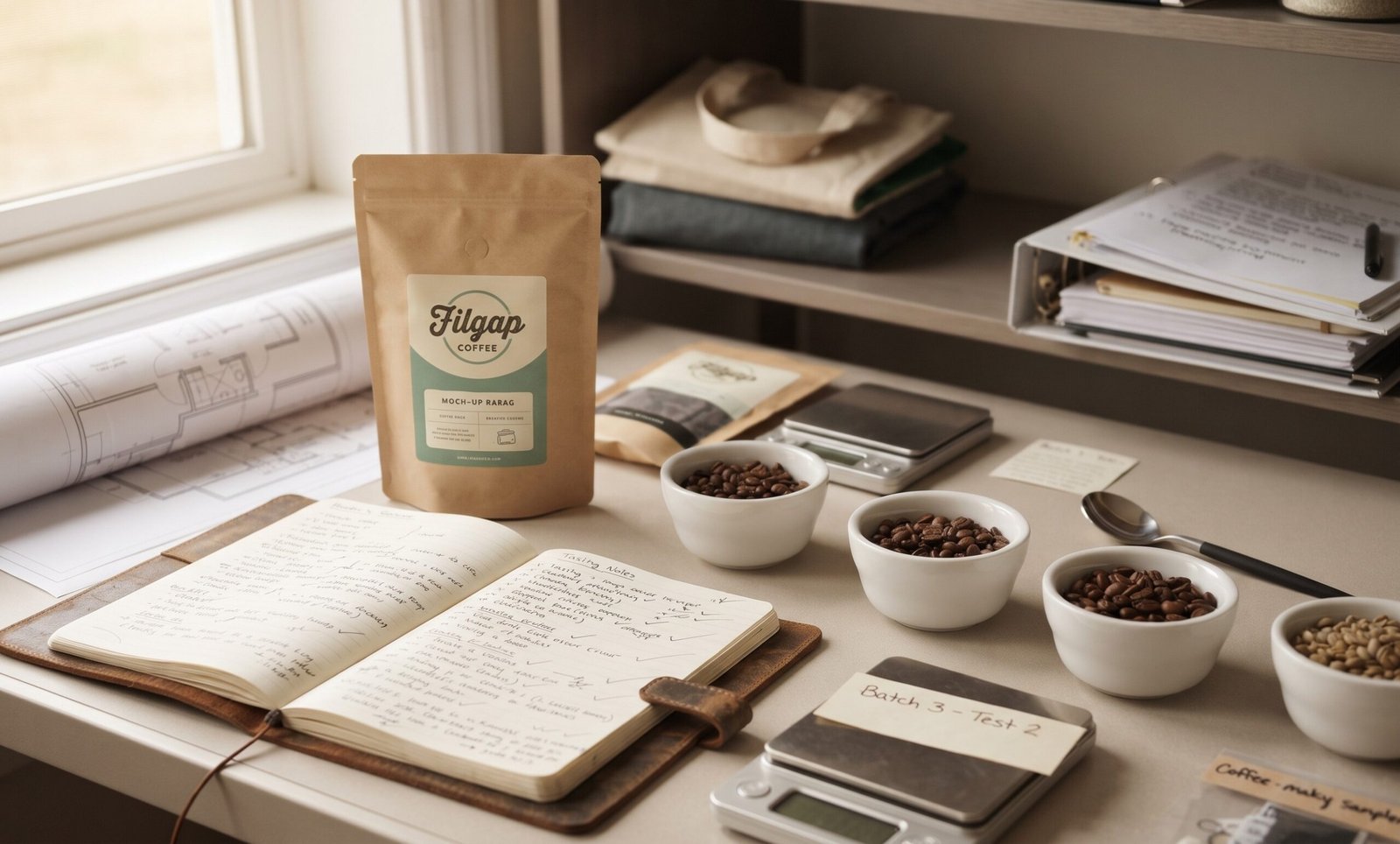
When I ask myself what could actually break Filgap, my first answer is not rent, competition or even sales.
It is the product.
Filgap is still developing the coffee I want to sell. That has to come first.
Coffee is difficult because taste is personal. One person can love a coffee that another person does not want at all. I cannot solve that by trying to make something everybody agrees with.
I have to decide what I believe is good.
What kind of sweetness do I want? How much body? What kind of acidity still feels balanced to me? What kind of coffee would I be comfortable handing to someone and saying, this is what Filgap is trying to do?
I need to get that part clear before I ask the market to judge it.
And even then, I may be wrong.
I may like the coffee very much and find out that other people do not see enough value in it. Or they may like it but not enough to buy it again. That is different from the coffee being badly made, but both matter.
So the first risk for me is still quality. Before I worry about how to sell more, I need something I genuinely want to sell.
Quality is not only what is in the cup
When I say quality, I do not mean only the roasted-bean flavour.
The green coffee matters. The roast matters. Freshness matters. The bag matters. The way the product is presented matters.
If one part feels careless, the customer does not separate it as neatly as I might when I am working behind the scenes. They experience the whole thing.
There is also an uncomfortable part of quality that is very practical.
The green coffee I want to use tends to cost more.
I can say that quality is non-negotiable, but I still have to make a business out of it. If I keep increasing the green-coffee cost, eventually the retail price has to carry it. Then I need to know whether customers feel the difference strongly enough to pay for it.
That balance is not completely solved for me yet.
I do not want to lower the coffee standard just to make the margin look easier. At the same time, buying the most expensive coffee I can find does not automatically make the product better or the business stronger.
I still have to find the point where the coffee is good enough that I believe in it, the price still makes sense, and the customer can understand the value.
That sounds simple when I write it. I do not think it will always be simple when I am buying green coffee.
There is a line where I would rather not sell it
This answer was easier for me.
If a roast or finished product is outside the line I consider acceptable, especially at the beginning, I would rather not sell it.
Maybe it can be donated or used another way. I would have to decide depending on the situation.
But I do not want to put it into a Filgap bag and sell it because I already spent money producing it.
That would save one bag and possibly cost much more later.
I am going to talk publicly about why I care about the coffee, freshness and how the product is made. If somebody hears all of that and then drinks a bad coffee, the problem is bigger than one disappointing cup.
The words start to look false.
A larger brand may survive an occasional bad experience because people already know what it usually does well. Filgap will not have that history at the beginning.
The product has to do the work first.
One reason I am starting small is that I could be wrong
I think this has become more important to me than it was in the 2024 plan.
If I rent a commercial space, the rent begins. Then other fixed costs start collecting around it. I may have staff, a build-out, utilities and more equipment.
The business can have advantages from a real space, of course. People can see it. They know where to find it. A physical room can make the brand feel more established.
But if sales are slow, every month becomes more urgent.
Coffee may need time.
It is not necessarily a dramatic product that people see once and immediately change their habits for. People already buy coffee somewhere. Filgap is a late entrant. There is no established Filgap brand in Squamish yet.
That is part of why I like the path I am on now: website, social activity, sampling, then the Farmers’ Market.
I can begin introducing the brand before there is a large fixed cost attached to every week of learning.
I can also test something that is harder to admit.
Maybe my own judgment is wrong.
I may think the coffee is good. I may think the positioning makes sense. I may think people will understand why they should buy fresh locally roasted coffee from Filgap.
That is still my assumption until people actually do it.
Starting smaller does not protect me from being wrong. It gives me a cheaper way to find out.
That matters because if I discover a problem before signing a lease, I still have choices. If I discover it after a large build-out, I may still have choices, but they become much more expensive choices.
I do not want to confuse slow with wrong
I also know myself well enough that I probably will not give up after a few bad Saturdays.
I would rather watch something closer to three months before putting too much weight on the first repeat-purchase pattern.
For the larger question — is demand actually weaker than I thought? — I think I would probably look more toward six months.
That is not a business rule. It is just where my mind goes now.
The opening period can be strange. People may come because they are curious. Friends or local people who have seen the website may try it early. Weather, market traffic and other things can make one Saturday very different from another.
I want enough time to see something more normal.
If people try the coffee, some buy, some come back and the response is slowly getting better, I can work with that.
If people sample it and almost nobody buys, that tells me something else.
If people buy once and very few come back over time, I need to look harder.
But even then I would not immediately know which assumption is wrong.
- Maybe the coffee is not good enough.
- Maybe it is good but the price does not fit.
- Maybe I am explaining it badly.
- Maybe the package size is wrong.
- Maybe the Farmers’ Market is not the strongest channel for that product.
This is where I think it gets difficult. A weak number tells me I have a problem. It does not always tell me which problem I have.
Whole bean is still the centre of Filgap.
Keurig-compatible capsules will also be part of the lineup. The format already has a large existing customer base, but those people can buy capsules almost anywhere. Filgap still needs a reason for them to come to us.
Espresso concentrate is different again. I personally think it is extremely convenient. I can imagine situations where I would much rather use it than go out and buy an espresso drink.
Customers may not see it that way.
So I have room to test product mix, communication, sampling and channel.
What I do not want to do is keep adding one new thing after another only because I am afraid to admit that the main thing is not working.
I do not know exactly where that line is yet.
If sales are weak, my own pay is easier to cut than the coffee
If sales were weak and I had to reduce something first, my answer would come quickly.
My own pay.
That may not be possible forever, and it is not advice for another owner. It is simply where my mind goes at this stage.
I do not want my first response to weak sales to be cheaper green coffee.
I do not want it to be older coffee, less care, or a worse customer experience.
Some spending can wait. Another piece of equipment can wait. A service I thought would be useful may be delayed. Something I planned to outsource may stay with me longer.
The product is different.
If I damage the thing I am asking people to come back for, I may improve one month’s cash and make the larger problem worse.
This is also why keeping a cash reserve matters to me.
Cash gives me more than the ability to pay a surprise bill. It gives me time not to make a bad decision just because I am scared.
If every slow week immediately threatens the business, almost everything begins to look negotiable.
I would rather avoid getting there.
There are risks I cannot remove at this size
One of them is me.
Right now a lot of Filgap depends on one person.
Roasting, packaging, purchasing, market preparation, selling, the website, social media, administration — I am involved in all of it.
I do not think there is a sophisticated answer to that yet.
This is a small owner-operated business. I cannot hire a complete team just to eliminate the risk that I get sick or become overloaded.
So yes, if I cannot work, that can create a problem.
I can organize the work better. I can simplify. At some point I can ask for help. But in the beginning, some concentration risk is simply part of the model.
Later, the people problem changes.
From earlier coffee businesses, I remember how strongly employees affect one another. The atmosphere inside a team can help the brand or quietly damage it.
I do not really like thinking of that only as ‘managing people.’ I think it is more about building a way of working where people can be part of the brand together without making the place miserable for each other.
That is not my immediate Farmers’ Market problem. If Filgap reaches a permanent room, it comes back.
Equipment is another area where I have to accept some risk.
For small consumables or inexpensive critical parts, keeping backup makes sense.
For major equipment, I cannot buy two of everything.
Buying a second expensive machine because the first one could fail someday might protect operations and hurt the finances at the same time.
At this scale, sometimes the backup is not another machine. It is knowing who can repair it, having a little time in the schedule, keeping a useful spare part, or having enough cash to deal with the problem when it happens.
I cannot remove every risk. I can try not to create a bigger one while preparing for it.
I may be the person who keeps going too long
This is the hardest part for me.
If the business is not working the way I expected, I think my personality is to keep trying.
I will probably ask what I can change. How can I improve the product? How can I explain it differently? How do I get more people to try it? Is there another channel? Is there a better way to make people understand what I am trying to build?
That persistence can help a business.
It can also make it difficult to admit that the evidence is bad.
I do not have a clean stop rule.
I cannot say today that after exactly six months, or after a particular sales number, I would stop. That would not be honest.
Maybe that is one reason the structure of the business matters so much to me now.
If I know I am the kind of person who may keep pushing, then I should be careful about how much I commit before the evidence is there.
I can start smaller. I can protect the quality. I can keep some cash. I can avoid a lease before I need one. I can watch whether people actually return, not only whether they say they like the coffee.
And if something is not working, I want enough room left to change it.
I know something will go wrong eventually. That does not bother me as much as building Filgap in a way where, by the time I understand what is wrong, I have already made the next decision impossible to reverse.