When I used to open stores in Korea, the opening date mattered.
Once a lease was signed, there was usually a date when rent would start. If the store was still closed after that, we were paying for a room that was not earning anything.
So yes, I worked backward.
If rent started on a certain date, I wanted the store open before then. Design, construction, equipment, hiring, training — all of those had to fit somewhere before that point.
That sounds like a simple timeline.
In practice, it was never that simple.
The difficult part was not putting dates beside tasks. It was knowing which task could actually begin, which one was waiting for another decision, and which delay would quietly move three other things with it.
For me, the product comes first
I keep coming back to this with Filgap.
Before I finalize a package design, I need to know what I am packaging. The product, size and type of bag come before the artwork that sits on the bag.
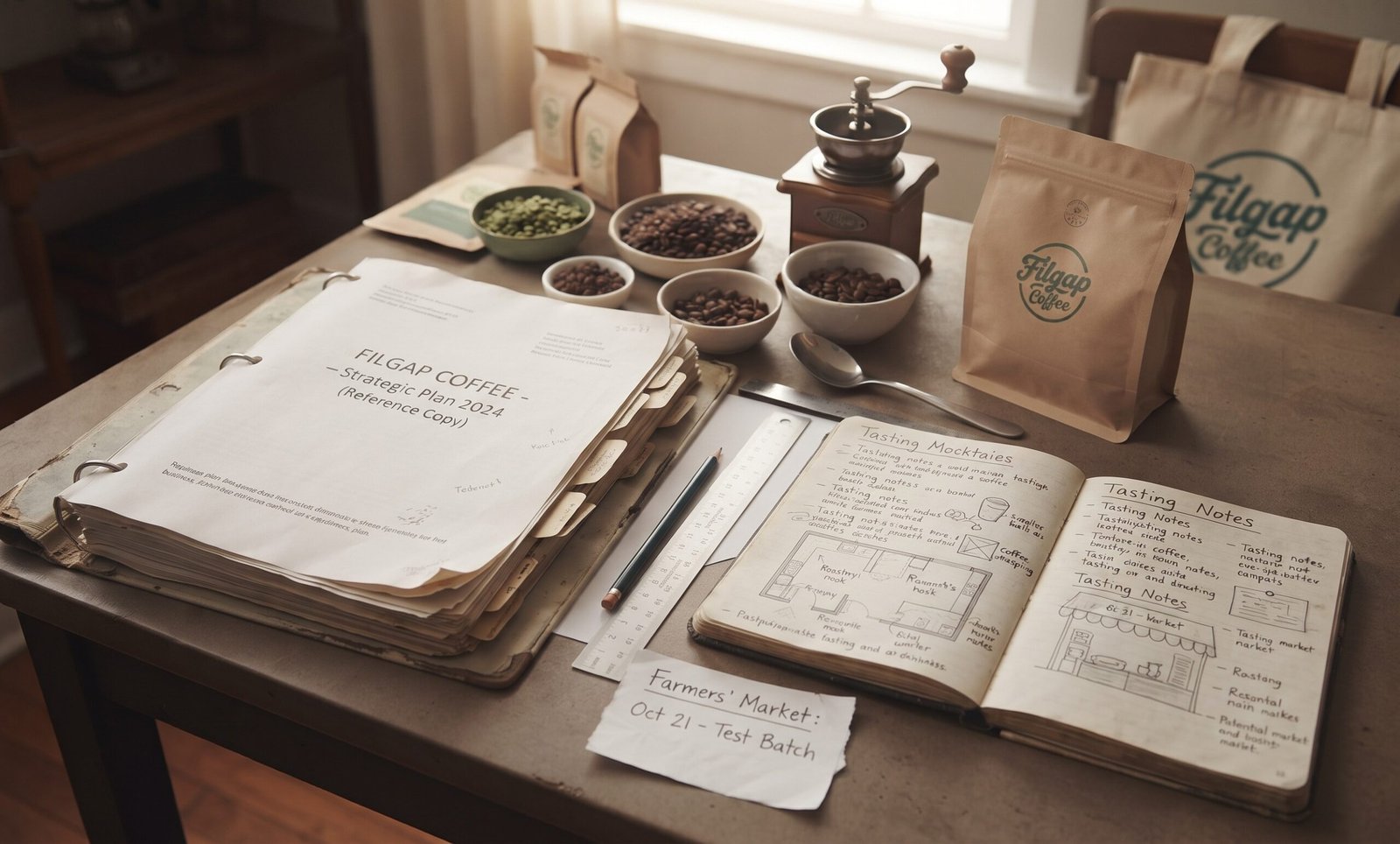
The Farmers’ Market booth is the same.
I can work on the logo now. I can look at tents and tables. I can collect references for how I want the booth to feel.
But if I want to design the display properly, I first need to know what I am selling and how I am going to sell it.
How many products? What sizes? How much space does each one need? Is everything handed over as a finished package? Does anything need to be prepared at the booth? Where does stock sit? What has to be easy for me to reach while I am talking to someone?
Once those things are clearer, the size of the display and the way I use the space start to make sense.
If I do it the other way around, I can still make something attractive. Then I may discover later that the operation does not fit the design very well.
I have seen people get excited about the visible part first. Design is easy to look at. It feels like progress.
But if the product and the way it will be sold are still moving, there is a good chance the visible work has to move again too.
That is why so much of my attention is still on the product now.
The coffee has to taste right, obviously. But I also need the first lineup, the package format and the basic selling method to become clear enough that later work is not built on something temporary.
I do not wait for everything
That does not mean I finish one box on the plan and only then open the next one.
I am not working that way now.
The website is moving while the product is still being developed. Brand work can move. I can observe the market, think about sampling, prepare content and start making Filgap more familiar before every package detail is final.
Some uncertainty is fine.
The question is whether the uncertainty underneath the work is likely to change the work itself.
I learned this again while building the website. If I had started by making pages without deciding what the site was for, what information belonged where and how it might grow later, I would probably have rebuilt much more of it.
A page can look finished and still be based on the wrong structure.
I think physical spaces are the same.
Before design, I want enough of the operation to be understood that the design has something real to solve.
Lead time can decide when I have to move
Some work starts early for a completely different reason.
It takes time to arrive.
Equipment is the obvious example. Packaging can be another. Imported items can be another.
If something has a long lead time, I cannot schedule it based only on the date I want to use it. I have to work backward from the delivery time too.
How much extra time I add depends on the supplier.
If I know the supplier and their timing has been reliable, I can plan closer to the stated lead time. If the relationship is new or the timing is less certain, I want more buffer.
I do not think there is one correct percentage to add.
The item matters. The supplier matters. What happens if it is late matters.
Inventory adds another problem because customers do not buy according to my spreadsheet.
I do not want too much stock, but I really do not like the idea of a customer coming back for something and finding it unavailable.
For a small brand trying to build repeat customers, that can be worse than carrying a little extra inventory.
So sometimes the schedule is not only about opening. It is about making sure the next order begins early enough that the product is still there when somebody wants to buy it again.
Starting early can also be a mistake
There are things I do not want to start too early.
Hiring is one. People need to be trained before opening, but if I hire much too early, payroll begins while there is not enough useful work for them to do.
A lease is a much more serious example.
I would not want to sign a lease and then start checking whether the space actually works.
That is backwards to me.
Before I sign, I want to understand as much as I reasonably can about permits, utilities, the intended operation, layout and design feasibility.
Of course there are things that can only become final after a lease. But I want to reduce the unknowns before I put my name on the contract.
Once I sign, rent is coming.
The clock is different after that.
In my earlier store work, a site often unlocked a lot of later activity. Once the space was secured, measurements could become final. Design could become specific. Construction could be scheduled. Equipment positions and utility needs could be confirmed.
That is exactly why I do not want to rush that first commitment.
One signature can make ten other things real very quickly.
Right now, Filgap does not have one opening countdown
This is very different from the stores I opened in Korea.
There is no commercial lease now.
I also have not fixed the first Farmers’ Market selling date.
I have thought about the season. In Squamish, the market starts earlier in the year, but the weather becomes more comfortable later. I have other variables around the timing too.
So at the moment, I do not want to put a date into the article just because it would make the plan look more complete.
I know what I am preparing for.
That is enough for now.
The next real milestone is getting the product and packaging to the point where I am ready to put them in front of people. Once that becomes more certain, the booth, display, inventory, sampling and launch communication can become more specific.
The permanent space is further away and, to me, it belongs on another timeline.
I do not see the Farmers’ Market as something I should do for a few months and then automatically move into a shop.
I want numbers.
I want to see sales, gross margin, profit, customer response and repeat behaviour. I want to understand whether the business can support the kind of fixed cost that comes with a commercial space.
Right now, I think I would want at least around a year of operating evidence before I took that question very seriously.
That is my current preference, not a rule.
After a year, the answer could still be no.
If the space comes later, I would check before I sign
If Filgap eventually reaches the point where a permanent roasting space and small tasting room make sense, I think the sequence becomes more familiar again.
But the first step is still not, “I like this location, so sign the lease.”
I would want to know whether the operation can actually work there.
Can it be permitted? Are the utilities sufficient? Does the layout make sense? Is there something about the space that will make construction much harder than it looks?
I want as many of those answers as I can get before the lease.
After a real site commitment, then measurements, design, permits, construction, equipment installation, hiring and training start becoming a much more concrete schedule.
Some of those things will overlap. They always do.
I am not interested in pretending there is one perfect order that applies to every project.
What matters to me is knowing which decisions cannot be made properly until something else is known.
Once I announce a date, I want to keep it
This is one place where I am fairly strict.
If the opening date is still internal, I can move it.
Once I announce it, I really do not like changing it.
Customers hear the date. Marketing starts using it. The team works toward it. Contractors and suppliers may be working toward it too.
That is why the buffer needs to be there before I announce the date, not after the problem happens.
Still, there are situations where the date has to move.
If a critical machine is missing or construction is not safe or complete, there is no point pretending.
Opening an operation that is not ready just to say the calendar was correct makes no sense.
I would rather delay than make the first customer experience part of the construction test.
A physical shop needs a soft opening
For a shop, I would definitely want a soft opening.
Training alone does not show everything.
Real customers arrive in a different pattern. Orders overlap. Somebody asks a question at the wrong moment. A product takes longer than expected. Two staff members think the other person is doing the same task.
That is what I want to see before the busiest opening period.
Can the orders move? Is the layout helping or slowing the team down? Are customers waiting in an awkward place? Can the equipment keep up? Is there something that looked fine on paper but becomes annoying after twenty real orders?
The Farmers’ Market is not a soft opening for a future tasting room in that sense. The operation is too different.
But it is still useful evidence about Filgap.
I can learn about the product and customer before I have to learn all of those things about a room.
Opening stores quickly changed what I notice
At Paul Bassett in Korea, I was involved in a period when stores were opening very quickly.
Those stores were not all copies of one standard box. Different sites had different designs and some operational differences.
That made the pace difficult.
There was always more than one store or project moving, and many things had to happen quickly.
We used Excel a lot to manage schedules. Today there are better project tools.
I do not think the software is what stayed with me.
What stayed with me was how easily one delay travelled.
A design decision could affect construction. Construction could affect equipment installation. A late piece of equipment could affect training. A change in the operation could send the design backward.
Even things that looked separate were often connected somewhere.
I think of it as a kind of butterfly effect.
Maybe that is a little dramatic, but that is how it felt sometimes. One change could travel much further than the box where it started.
The challenge then was coordinating many stores and many people at speed.
The challenge now is almost the opposite.
Filgap is small, but I am doing most of the work myself.
My own capacity is another dependency.
There may be ten things that technically can happen at the same time. That does not mean I can personally do all ten at the same time.
I still want dates
After all of that, I do not want to make the timeline sound loose.
I like dates.
If I put a date on something, I want to make a serious effort to keep it.
Without dates, work can keep moving into “later.”
But I trust a date more when I understand what is underneath it.
- What has to be decided first?
- What can move now?
- What should wait?
- What has a long lead time?
- Where do I need buffer?
- If this one thing moves, what else moves with it?
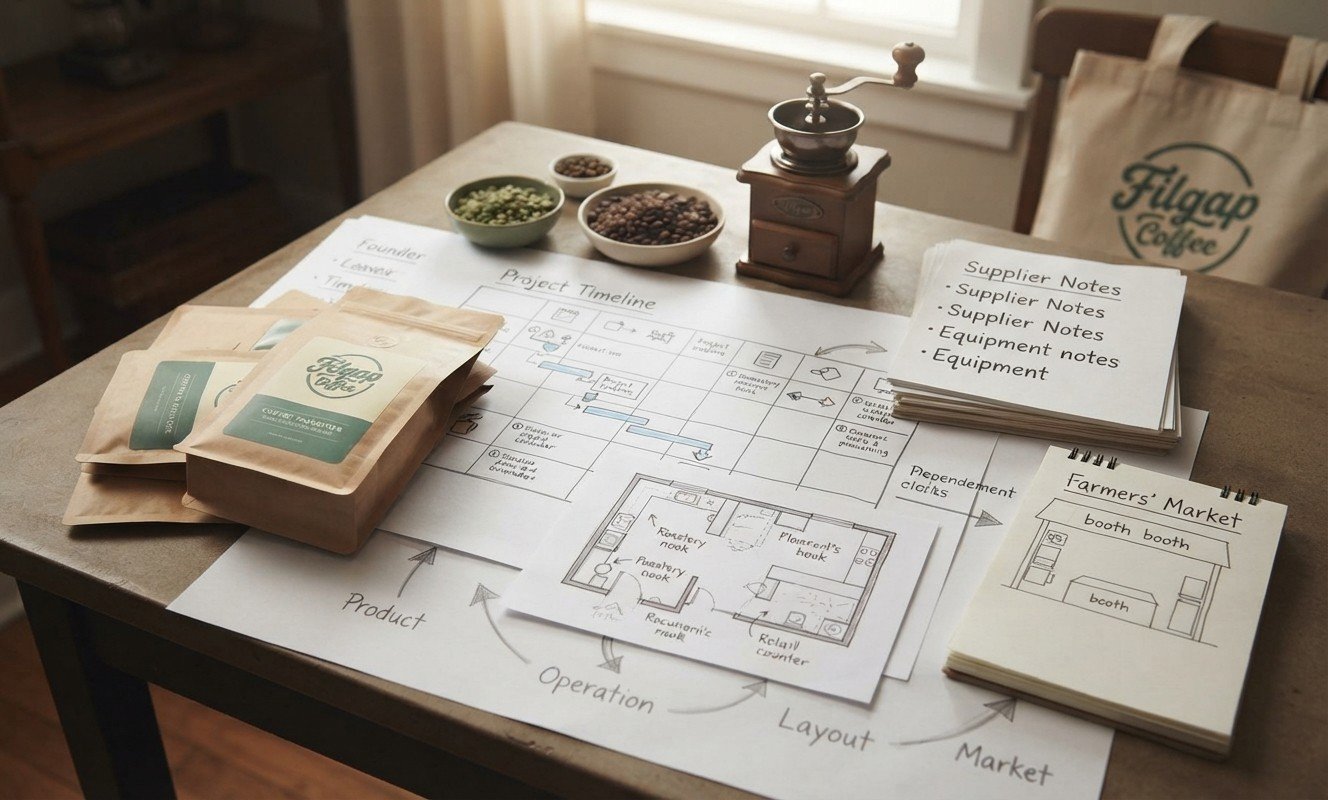
That is the part I want the timeline to show me.
The date is still there.
I just do not want it sitting by itself.