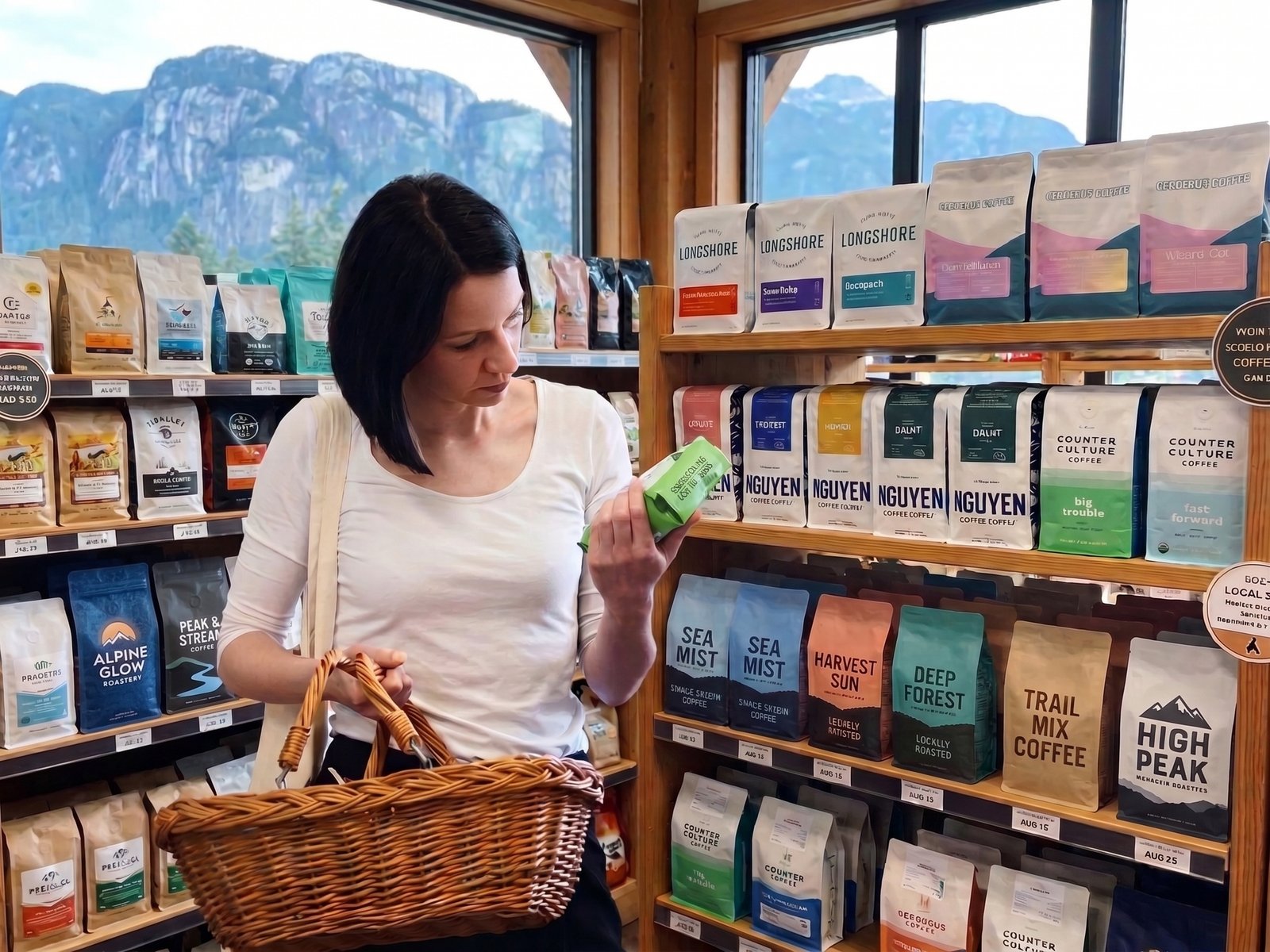
I developed a habit when shopping for groceries in Squamish.
If I passed the coffee shelves, I would start turning bags over and looking for a roast date.
Most of the time, I put them back.
In my experience, finding a bag that had been roasted only a week or two earlier was unusual. Sometimes I would get lucky. I would notice that a coffee had arrived recently, check the date again, and put it in the cart.
It became almost automatic.
I did the same thing when I saw bags of coffee at local cafés. I tried ordering online too. One local shop occasionally had relatively fresh beans because it brought coffee in regularly from different roasters, and that sometimes worked well for me.
None of this was a serious business investigation at the time.
I was just trying to buy coffee for home.
That is probably the most accurate place to begin the Filgap story.
I wasn’t simply looking for “good coffee”
There is plenty of good coffee in the world, and I do not think taste works in a way that allows one person to declare what everyone else should prefer.
Coffee is personal.
I have a particular direction I tend to enjoy. My experience with coffee in Australia influenced it quite a bit. I generally lean toward coffees with some body, sweetness and a medium-roast direction rather than very light, highly acidic profiles.
Even that description is imperfect.
What matters more to me is whether the roasting brings out a point where the particular coffee tastes especially good. I like sweetness. I like balance. I want to taste what is interesting about the coffee without feeling that the roast itself has taken over.
Finding that combination consistently was not always easy for me.
Then there was freshness.
So the problem was never simply:
I can’t find good coffee.
It was more specific.
I was looking for coffee that suited my taste, was roasted within a timeframe I was comfortable with, and was reasonably easy to buy again.
Those things do not always arrive together.
I wanted to control the timing
I tend to think about coffee as food.
That does not mean I believe coffee should always be consumed immediately after roasting.
Some coffees, especially lighter roasts, can benefit from more resting time. Different coffees behave differently, and I do not think there is one number of days that works as a universal rule.
What matters to me is having some control over that timing.
If I buy coffee relatively soon after it has been roasted, I can decide when I want to open it. I can let it rest. I can see how it changes. I can choose the point at which I enjoy it most.
If I buy it after much of that time has already passed, that choice has partly been made for me.
That is why I look for a roast date.
A best-before date does not always answer the same question. If all I can see is a best-before date, I may need to find out whether that particular company uses a three-month, six-month, one-year or some other shelf-life period before I can even estimate when the coffee was roasted.
I am not suggesting that a best-before date makes the coffee bad.
It simply does not tell me the thing I personally want to know first.
When was this roasted?
One bag also has to last
There is another very ordinary part of this that matters.
A bag does not disappear the day I buy it.
My wife and I usually take around ten days to finish one, depending on how much coffee we make. Some days it is one cup each. Other days it might be two.
So when I looked at a bag that had already been sitting for a while, I was not only thinking about how it would taste that morning.
I was thinking about the last few cups too.
If I wanted to enjoy most of the bag within a certain window, buying it later made that window increasingly tight.
Again, this was not a grand business problem.
It was a small household problem that kept repeating itself.
Those are sometimes worth paying attention to.
Then I started wondering how everyone else does it
I make coffee almost every morning.
I grind whole beans at home and make the coffee myself. Because of that routine, buying beans is not an occasional purchase. It keeps coming back.
At some point I started wondering what other people in Squamish were doing.
Were they ordering everything online?
Were they buying beans when they happened to find something fresh locally?
Did they care about roast dates at all?
Were there other people who preferred a similar style of coffee?
That was when my personal habit slowly became a business question.
Could there be other people in Squamish who want coffee this way too?
That question still matters to Filgap today.
But there is an important distinction.
The fact that I want something does not mean there is a market for it.
A personal problem is not yet a market
This is where I think business ideas can become dangerous.
It is easy to experience a problem yourself and immediately assume that many other people must feel exactly the same way.
Maybe they do.
Maybe they do not.
Or perhaps they feel the problem but are perfectly happy with the way they already solve it.
That difference matters.
I might care enough about roast dates to turn bags over in a grocery aisle. Someone else may care much more about convenience. Another person may prefer ordering from a favourite roaster in Vancouver and see no reason to change.
A business cannot simply assume those people are waiting for it.
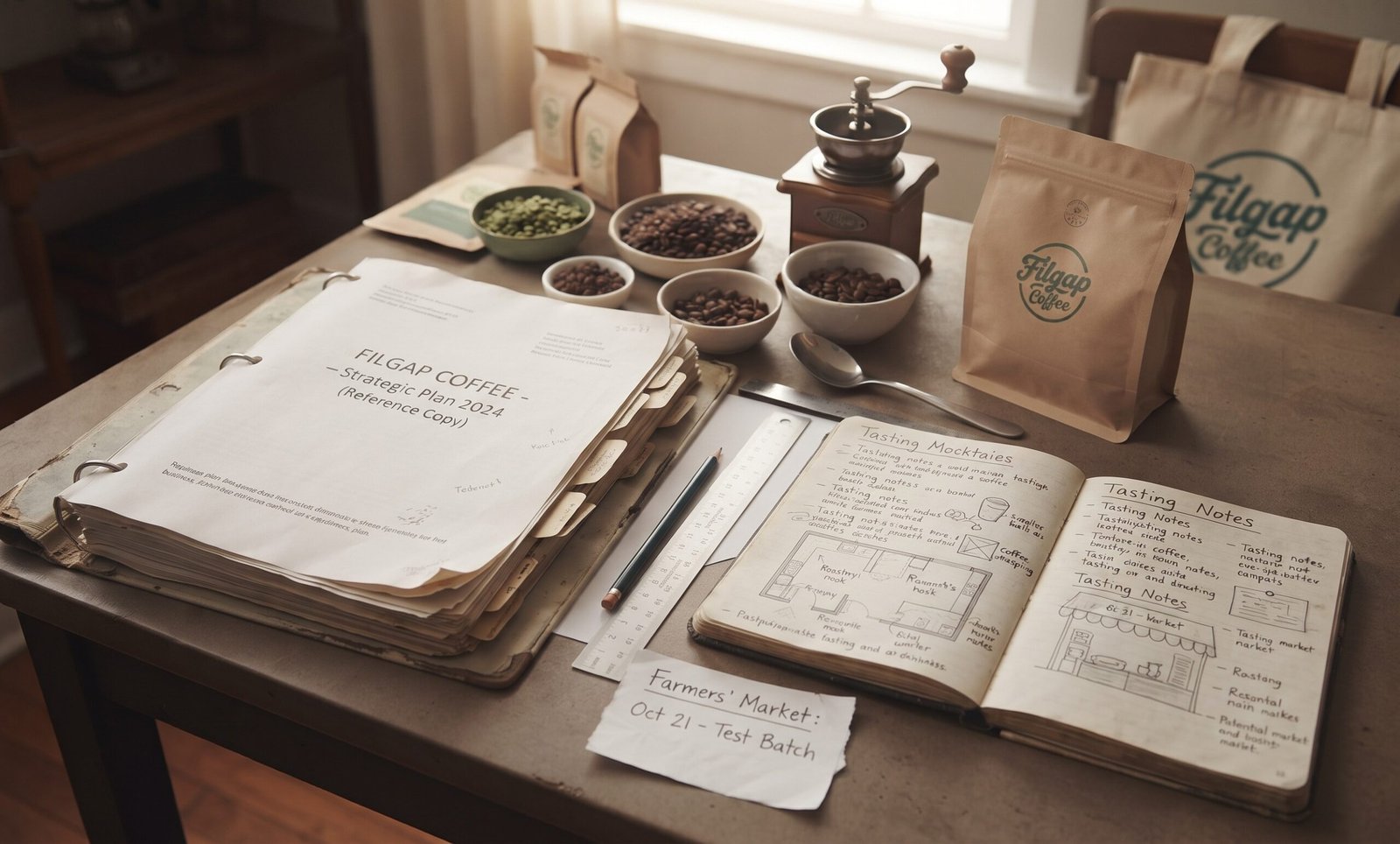
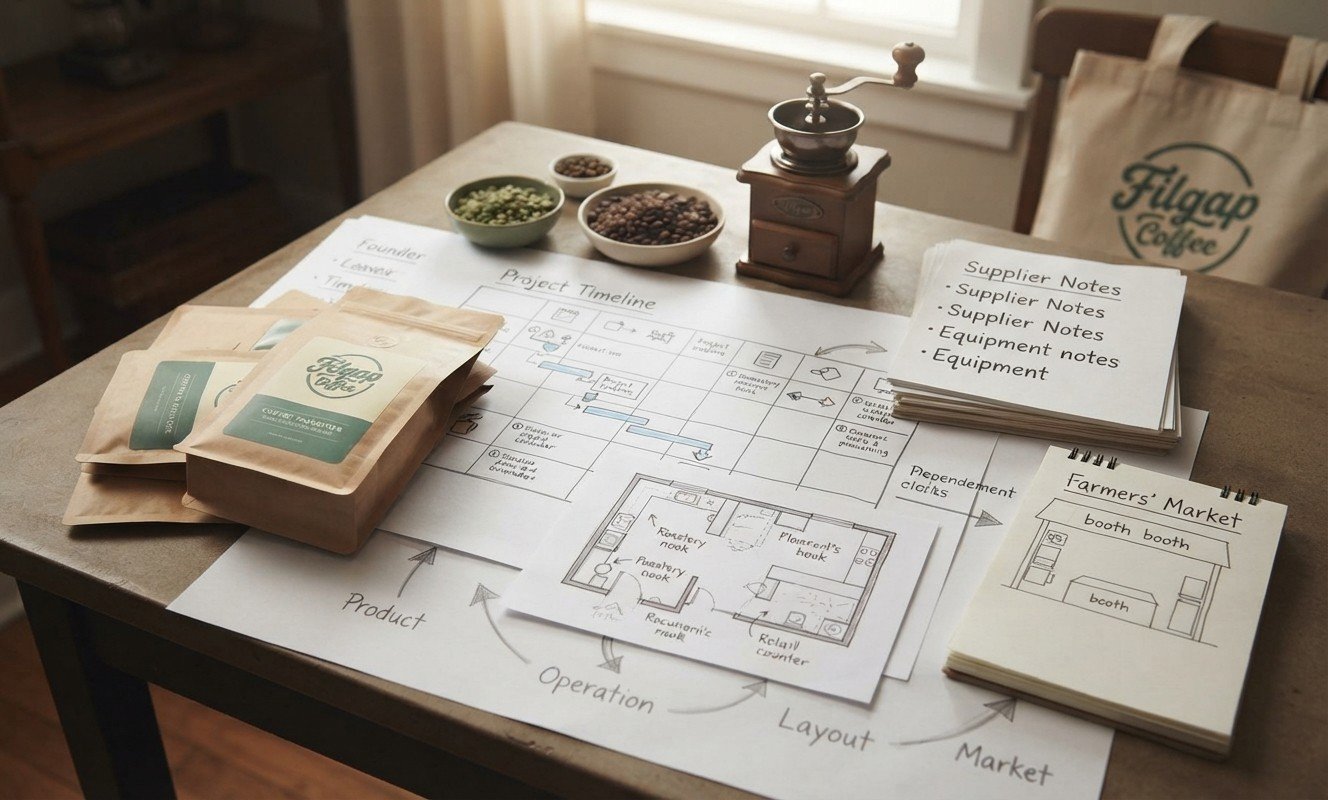
That is one reason the current Filgap plan starts much smaller than the coffee shop I originally imagined.
The path I am working toward now is closer to:
roast → sample → listen → improve → sell locally → see whether people come back
before committing to a permanent coffee space.
Sampling matters.
Selling at a Farmers’ Market matters.
Repeat purchases probably matter even more.
Someone saying, “That’s interesting,” is not the same as someone coming back to buy another bag.
I need to find out which one happens.
I made the solution too big too early
When I first planned Filgap Coffee, I spent a lot of time thinking about physical space.
Squamish has become an expensive place for commercial real estate, but I still liked the idea of having a reasonably large place where people could gather.
I sometimes pictured something closer to a warehouse-style coffee shop: enough room to roast, serve coffee and give people somewhere to meet.
I still like parts of that dream.
What has changed is my assumption that it needs to be the first solution.
A large space creates another set of problems immediately.
More square footage means more rent. A cheaper location may be farther away. A larger café can require more equipment, more staff and more sales simply to carry the same fixed costs.
At some point I had to ask myself whether I was moving too quickly from:
It would be nice to have a place like this in Squamish.
to:
Therefore I should build a large café.
Those are not the same statement.
The first describes something I value.
The second commits a lot of money to one particular solution.
There are many steps missing between them.
The problem and the solution are different things
This has become one of the more useful lessons from working on Filgap.
A problem can stay fairly stable while the solution changes completely.
The first problem I noticed was fairly simple:
I wanted easier access to fresh whole-bean coffee that suited my taste.
The solution did not necessarily have to be a full café.
It could begin with home roasting.
Then sampling.
Then a Farmers’ Market.
Maybe preorder and local pickup.
Maybe local delivery.
Eventually it could become a small commercial roastery with a tasting room.
The physical coffee shop may still come.
I hope it does.
But it no longer has to carry the entire idea from day one.
That makes the problem much easier to examine honestly.
Before choosing the solution
If I were starting another small business idea from scratch, I would spend more time on the problem before designing the business around it.
I would ask:
- What do I repeatedly wish were easier to find, buy or use?
- Is the problem really about quality, or is it about access, convenience, price, timing or experience?
- Who else seems to experience the same thing?
- How are they solving it now?
- How often does the problem actually occur?
- Would changing the solution be worth paying for?
- What is the smallest credible way I can test the idea?
- What would repeat behaviour look like if the idea were working?
- Am I solving the problem, or am I becoming attached to a particular version of the solution?
That last question is the one I wish I had asked earlier.
It is easy to fall in love with the coffee shop.
The room. The equipment. The furniture. The menu. The sign outside.
Those things are tangible. They are fun to imagine.
The problem is quieter.
But the problem has to survive even if the first solution does not.
The first gap I’m trying to fill
I still do not know how many people in Squamish care about coffee in exactly the way I do.
I do not know how many would change where they buy their beans.
I do not know whether freshness will matter to them as much as flavour, convenience, price or something I have not considered yet.
Those are questions to test rather than answers to invent.
What I do know is what I would like to make easier:
I want people in Squamish who grind and brew whole beans at home, like I do, to be able to buy fresh coffee that suits their taste more easily and come back for it regularly.
That is a much smaller idea than building a coffee shop.
For now, I think that is a good thing.
Before deciding exactly what Filgap should become, I want to find out whether there are other people here asking the same question I was:
Could there be other people in Squamish who want coffee this way too?