Filgap is taking longer to build than I first expected.
There isn’t one simple reason for that.
One decision I have spent a lot of time on is the roaster.
I never treated choosing one as a simple equipment purchase. There are many roasting machines in the world, and they are built around very different ideas about heat, airflow, controls, data and production. The technology keeps moving too.
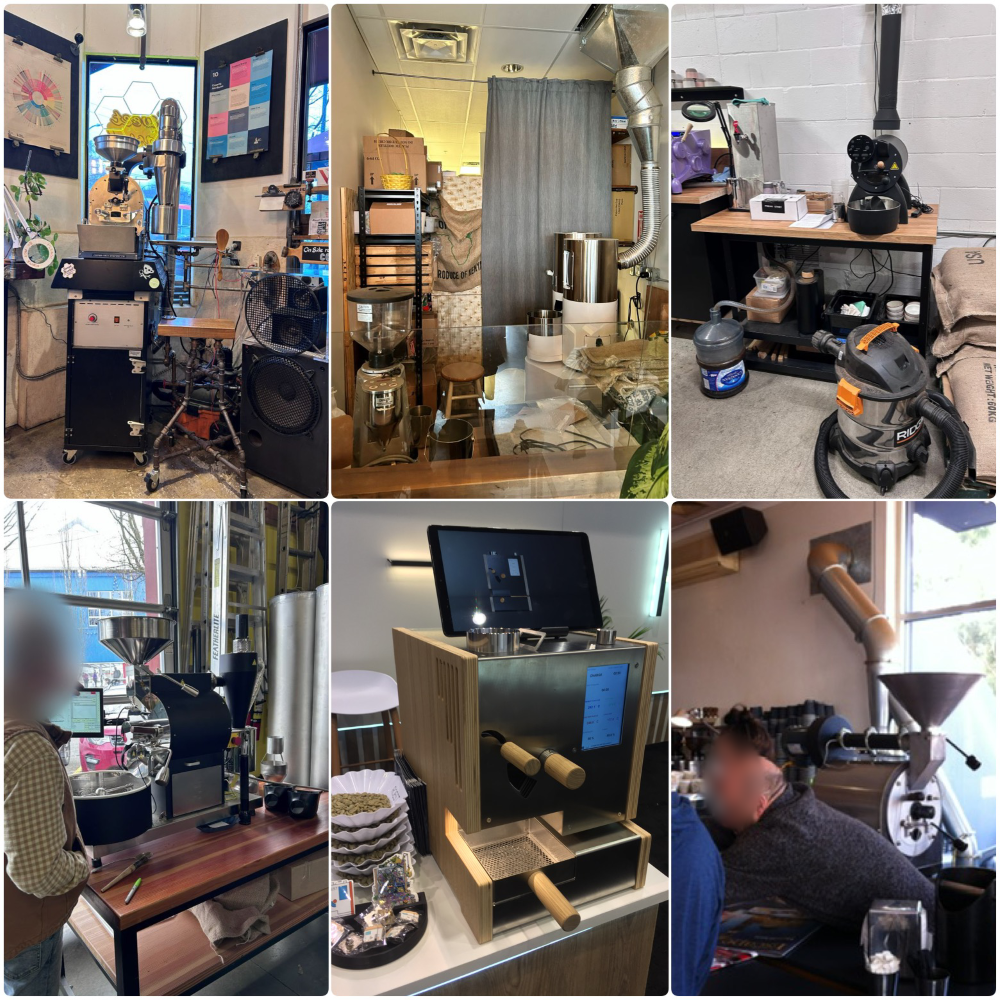
From the beginning, I spent a lot of time looking at those differences. I visited roasting spaces, watched machines operating, compared layouts and asked questions.
Some of the machines I photographed were serious candidates. Others were simply useful to study. I found myself looking beyond the machine itself: the exhaust, cooling, access for cleaning, the work surface beside it, the tools around it, and how the operator actually moved through the space.
Capacity mattered. Energy use mattered. Controls and installation mattered.
But I kept coming back to a simpler question:
Can this machine help me make the coffee I want to make?
That question has not changed.
What has changed is how much evidence I want before I feel comfortable answering yes.
Looking at the machine is only the start
A specification sheet can tell me a lot. Batch size, power requirements, dimensions, heating method and control features all matter.
Seeing a machine in person can tell me more.
But neither one tells me everything I want to know now.
Who is already using it?
How long has the machine been in real production?
What is it like when it is no longer new?
What happens when it needs maintenance? Are parts reasonably available? What kind of support exists when something does not work as expected?
And after all of that, can people use it repeatedly to make good coffee?
I pay more attention to those questions now.
That does not mean I have become suspicious of new technology. Every established machine was new at some point, and I am still interested in new ways of roasting.
It just means I see technical promise and real-world proof as two different kinds of evidence.
I want both before I build too much around the machine.
The room made the decision feel bigger
The more I worked on the actual roasting space, the less the roaster felt like a stand-alone purchase.
Where it sits affects the electrical work. Its size affects how I move around it. Cleaning needs access. Green coffee has to come in, roasted coffee has to move out, and other equipment has to fit around the process.
Once I started mapping those pieces on the floor plan, choosing a roaster began to feel more like designing a small production system.
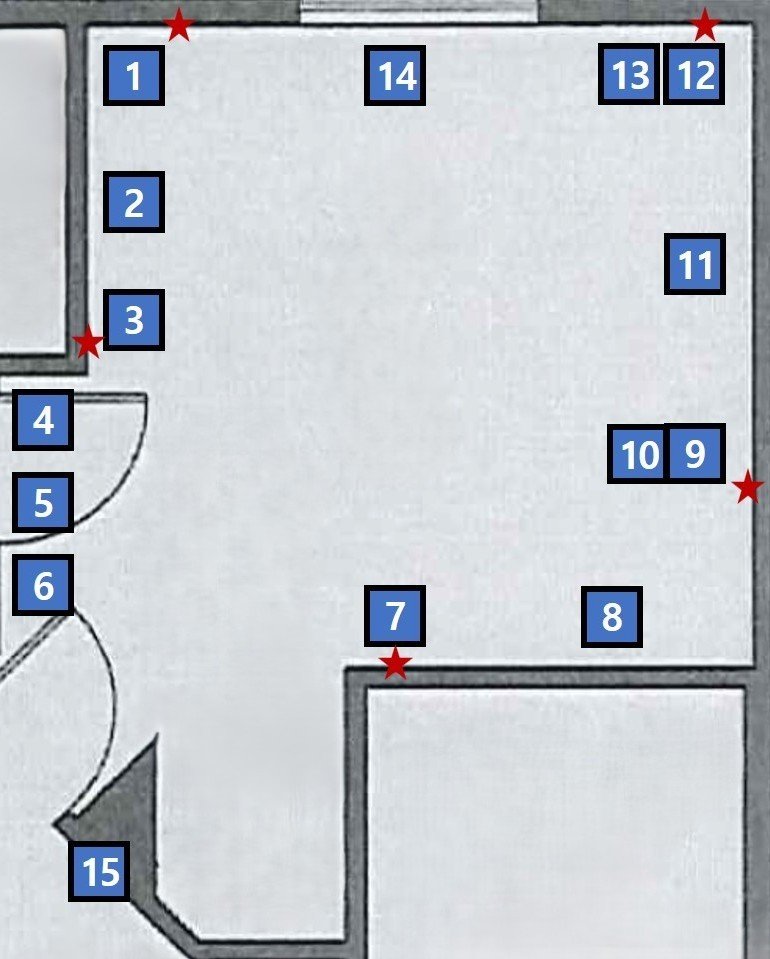
That changed the way I looked at some very ordinary things too.
A stainless worktable is not exciting equipment. But I chose stainless because it is practical to clean and maintain. If coffee is going to be weighed, tested, moved and packed on a surface every day, I would rather make that part easy to look after.
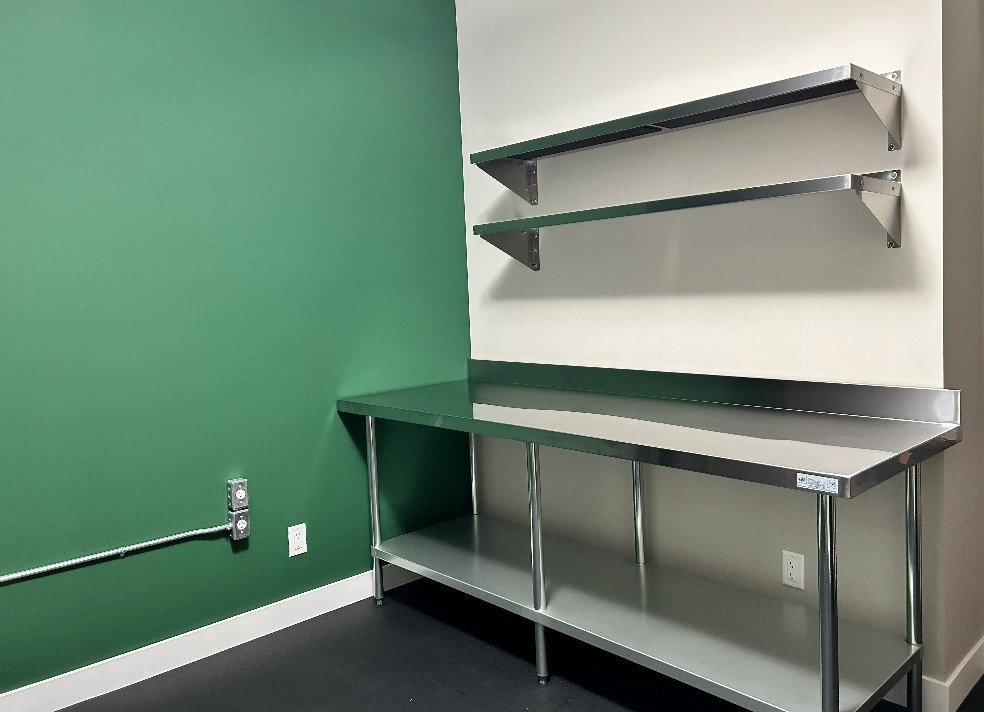
The same is true of the other equipment around the roaster.
A destoner is not the machine that gets most of the attention, but it has a job in the process. So do shelves, tools, cleaning access and enough space to move without constantly working around something that was put in the wrong place.
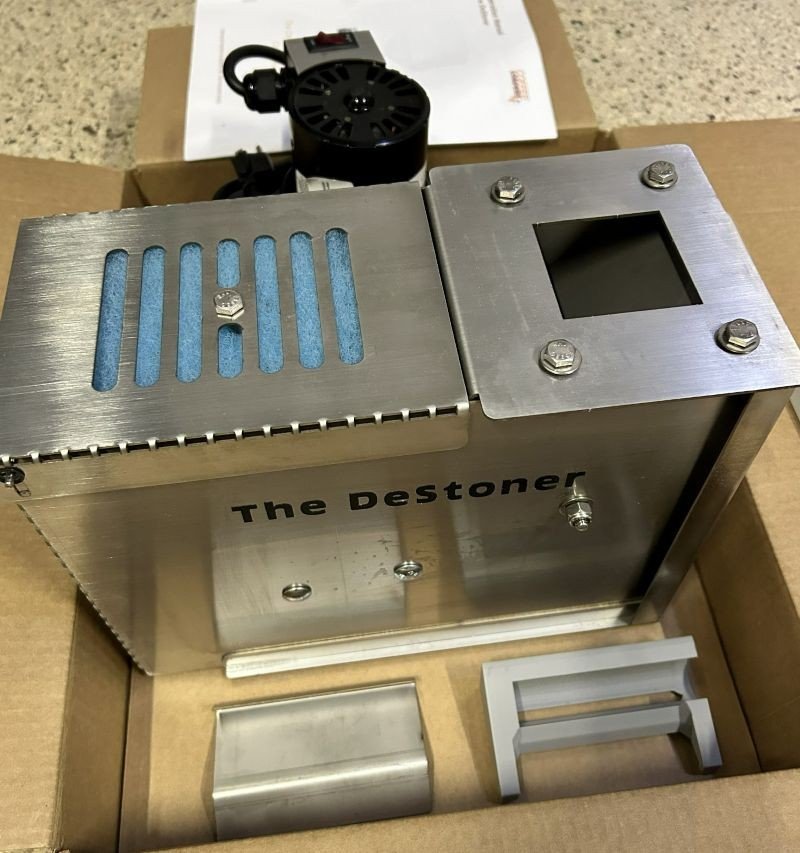
None of those decisions is very dramatic by itself.
Together, they start to make the room real.
Measuring what I can
I have also been adding tools for quality control.
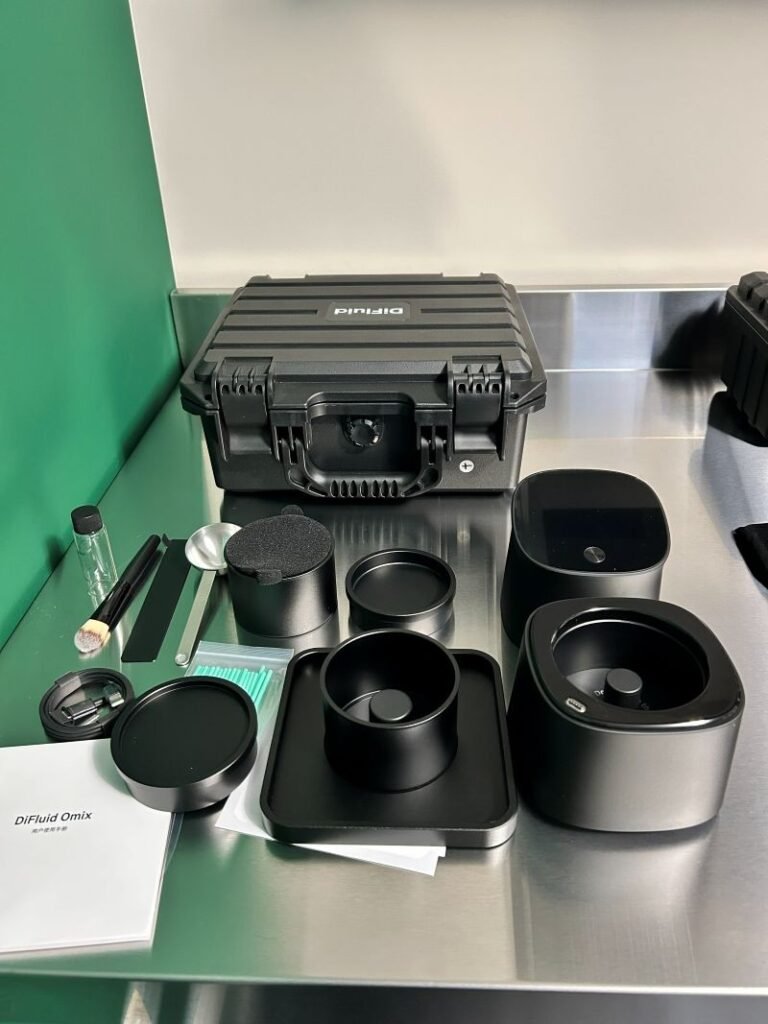
The cup is still the final test for me. Numbers do not replace tasting.
But measurements can help me understand what happened.
Moisture, water activity, density and roast colour give me information I can record and compare. If one batch behaves differently from another, or the cup tastes different from what I expected, those measurements give me more places to look.
I like having both.
The data can describe part of the process. My senses still have to tell me whether I like the result.
That is also why consistency does not mean simply repeating the same settings forever. The goal may stay the same while the coffee, the conditions or something else in the process changes.
I want enough information to notice that and make a decision for a reason.
More than one room is taking shape
The roasting room is only part of the setup.
There is a separate storage area too.
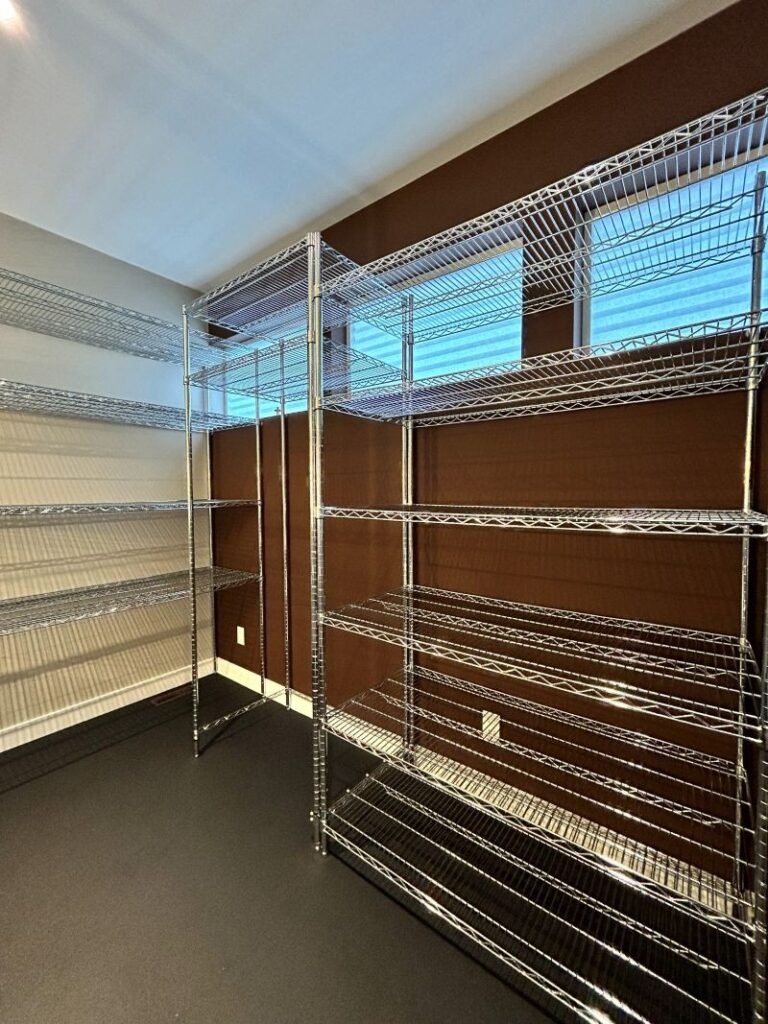
That may not sound like much of a coffee story, but it matters to me. Green coffee, packaging, supplies and equipment all need somewhere sensible to go. A clean roasting room becomes much harder to maintain if everything that does not fit simply gets pushed into the nearest open corner.
I would rather prepare the supporting spaces at the same time.
This part of building Filgap has made me appreciate how many physical decisions sit behind something as simple as handing someone a bag of coffee.
Most people will never see many of them.
That is probably how it should be.
The coffee should be more interesting than the shelving.
New technology still interests me
None of this has made me less interested in roasting technology.
I am still curious about different ways of applying heat, better control systems, electric roasting, energy efficiency and what happens to the air leaving the roasting process.
Living in British Columbia makes the electricity side especially interesting. BC Hydro says more than 98% of the power it generates comes from clean, renewable sources, with the vast majority coming from hydroelectric generation.
That does not mean an electric roaster is automatically the right roaster.
But it is part of the place where I am building Filgap, so I think it deserves to be part of the decision.
I will come back to that in another PROGRESS story.
For this one, the more important change is simpler.
I used to ask whether the technology looked capable of producing the coffee I wanted.
I still ask that.
Now I also want to know whether the complete machine has enough real-world history for me to trust it as part of the system I am building.
Where things are now
I have chosen the next direction for the roaster, and that part of the build is moving again.
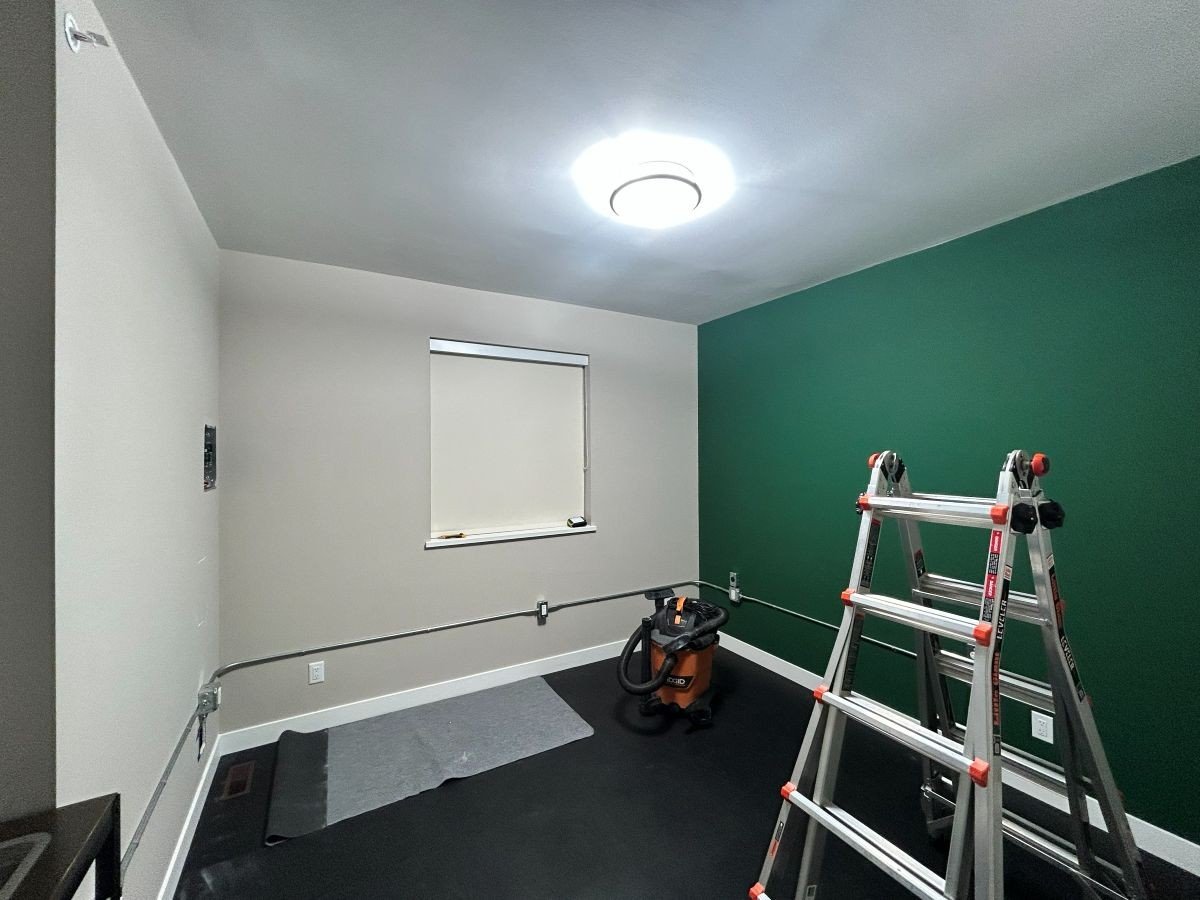
Some of the supporting equipment has already arrived. The room is being prepared around what comes next.
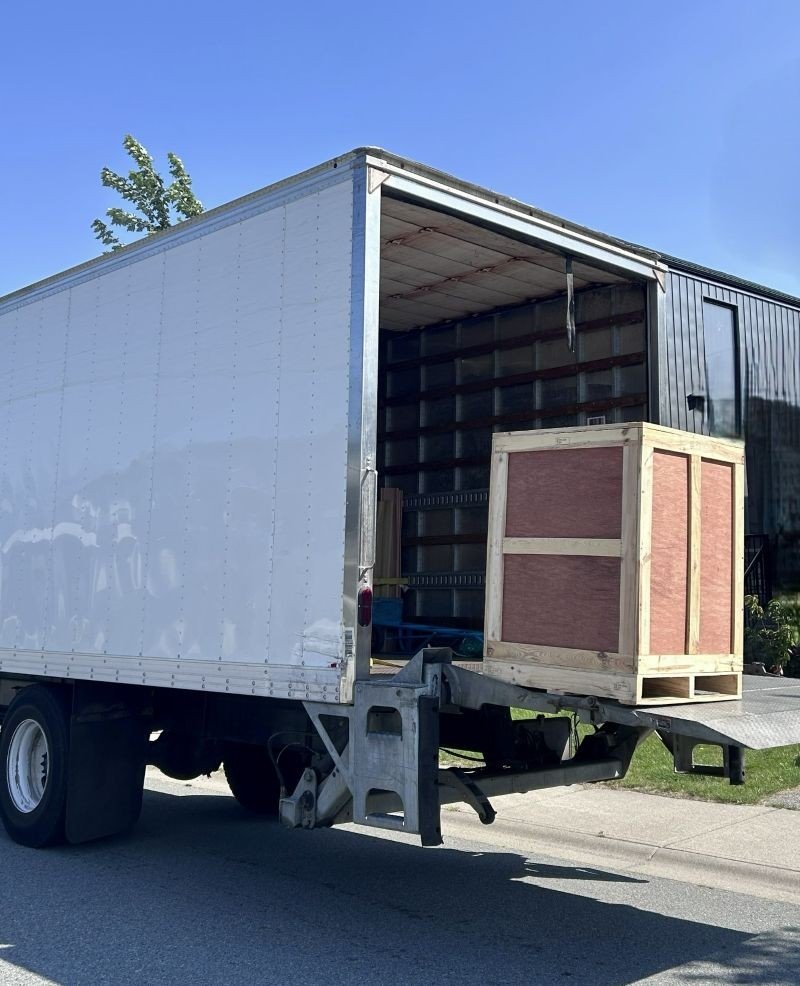
I am deliberately not introducing the roaster yet.
Ordering a machine is not enough for me to tell a success story about it.
I want it here first. I want to install it, learn it and roast with it. I want to see where the specifications match reality and where I still have work to do.
Then I will have something useful to share.
For now, the question is the same one I started with:
Can this machine help me make the coffee I want to make?
I just need more than a specification sheet to answer it now.
I need to understand the technology.
I need to see how the machine works in the real world.
I need to understand the system around it.
And eventually, I need to taste the coffee.