I didn’t drink coffee until 2011.
For most of my life, coffee was simply something bitter that other people seemed to enjoy.
Then it became my job.
I had spent my career in the food industry. After returning to Korea from a year of study in Singapore, I was asked to take responsibility for a new coffee business my company had started: Paul Bassett.
That was January 2011.
If I was going to be responsible for coffee, I had to drink it.
And if I was going to drink it, I had to understand it.
That is more or less how coffee entered my life.
Learning coffee seriously
The business was positioned at the premium end of the market, around specialty coffee, so I had both the chance and the responsibility to go fairly deep.
I spent a lot of time studying coffee and thinking about quality.
My earlier experience in the food industry came into it naturally. Quality and consistency were already things I had learned to take seriously.
With coffee, I became interested not only in whether one cup tasted good, but in why it tasted good, what could make it different the next time, and how the same standard could be repeated by different people in different stores.
As the business grew, that question became more complicated.
It is one thing to make a good cup yourself.
It is another thing to have many people, in many stores, make coffee with a consistent level of quality every day.
I spent a lot of time thinking about that.
In 2013, the coffee business was spun out into a separate company, and I became its CEO.

That meant my job became much broader than coffee itself. There were stores, people, training, product, operations, numbers and all the other things that come with building a business.
But coffee quality remained something I found difficult to treat casually.
By the time I left
The business kept growing.
On November 30, 2017 — my last day with the company — we opened our 103rd Paul Bassett location.
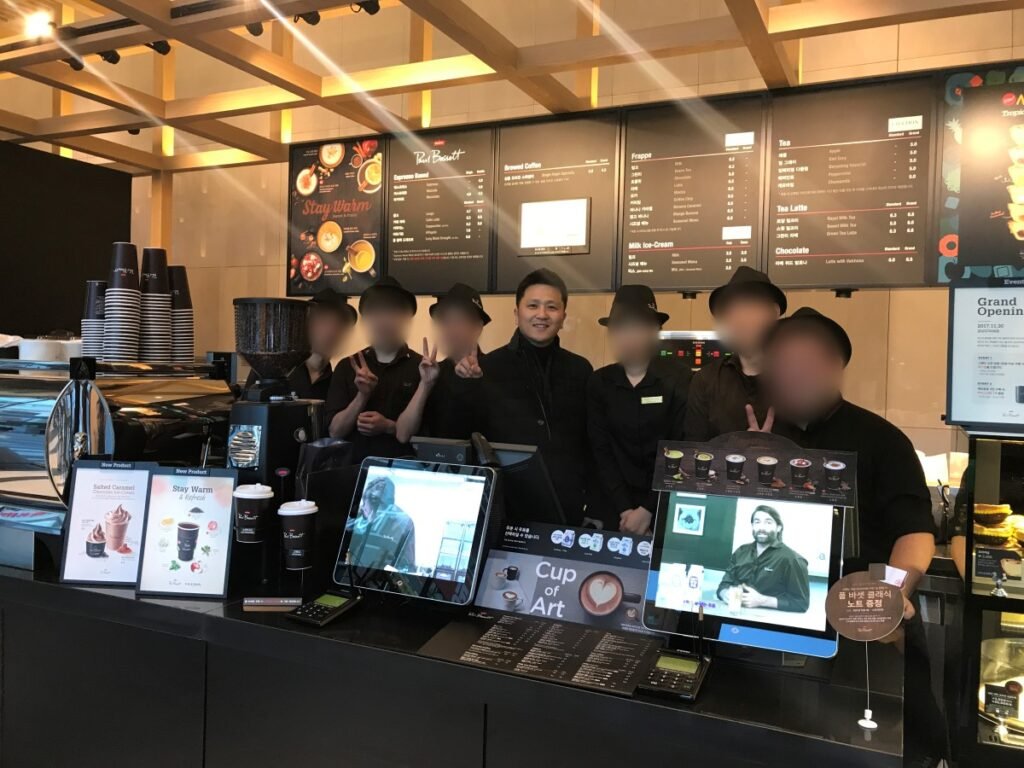
I’m grateful for what we built and for what I learned there.
I also genuinely enjoyed the work. That was part of why it became so consuming.
Coffee shops start early. Some finish late. At the time, we even had locations that operated around the clock.
I believed the head office existed to support the people working in the stores. If something happened in the field and they needed help, I felt that someone needed to be available.
The people in the stores had schedules.
I gradually stopped thinking about my own time in the same way.
Eventually, weekdays and weekends, morning and evening, even what day it was became less important to me.
I was simply working.
And because I liked the work, it was easy to keep going.
I don’t look back at that period and think it was bad. I learned an enormous amount, worked with many people and had opportunities I am still grateful for.
But at some point I began asking a different question.
My daughter was still young.
I started thinking about what I might regret later if I continued at the same pace.
I didn’t think I would regret working hard.
I thought I might regret missing the years when my daughter still really needed her dad.
So I stopped.
Starting again in Canada
Leaving that job did not lead directly to Filgap Coffee.
There were years in between.
Our family came to Squamish for what was supposed to be a one-year gap year, and we ended up staying.
Later, I returned to coffee, but from a very different position.
For about three years, I worked at a local café in Whistler.
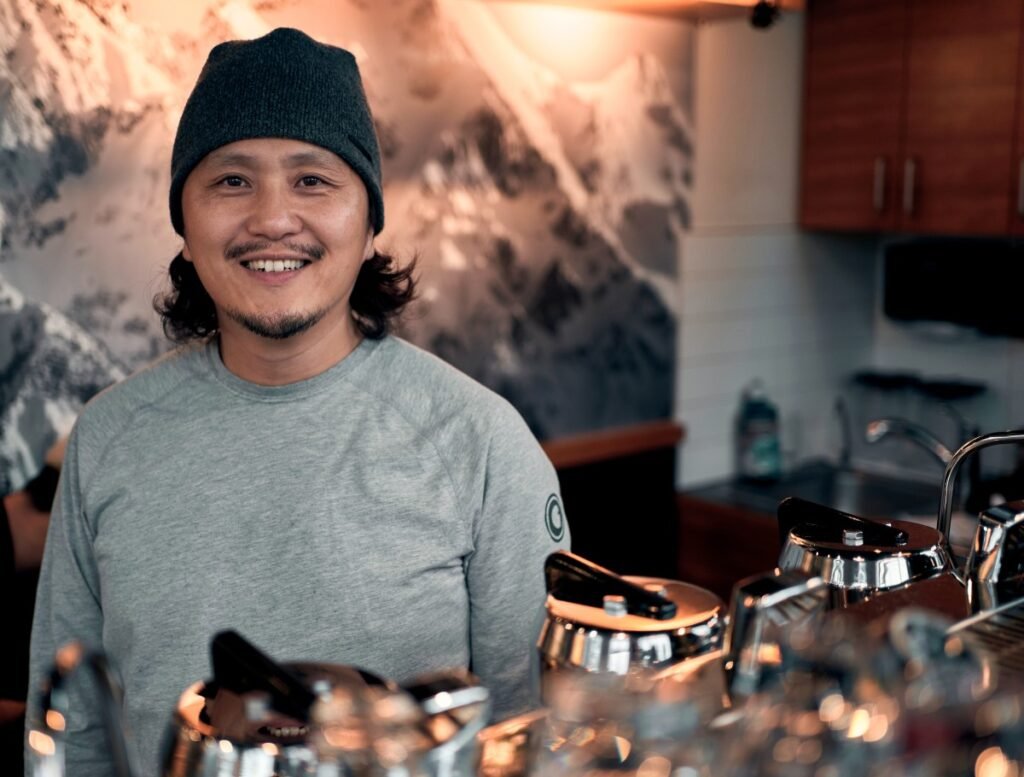
That experience was useful in a way I had not expected.
In Korea, I had spent years developing systems and deciding how I thought a coffee business should operate.
Then I came to Canada and saw someone doing things differently.
Sometimes I would think, I would have done this another way.
Then I would watch.
And I would realize that this way worked too.
Sometimes it worked very well.
Maybe it suited this place better.
So I learned again.
I learned more about how cafés operate here, how people interact with customers, how products are made and served, and how a smaller local business can have its own rhythm.
I didn’t need to forget what I had learned before.
But I did need to understand that it wasn’t the only way.
Why come back now?
For a while, I didn’t know whether I would build another coffee business.
Then several things slowly came together.
My daughter grew up.
She is at a stage now where she doesn’t need her dad in quite the same way she did when she was little.
During our gap year, I also realized something about myself.
I seem to need some kind of work in my life.
Not necessarily something huge. Just something I can keep doing, learning from and staying connected to as I get older.
And I was still drinking coffee.
I was still looking for the kind of freshly roasted specialty coffee I wanted to drink close to home.
At some point those things began to connect.
Maybe coffee was something I could return to.
This time, here in Squamish.
Smaller this time
I didn’t come back to coffee with complete confidence.
If anything, there was probably more hesitation than confidence.
My earlier experience was broad, but it was different.
I had managed businesses, built systems and worked on quality across many stores. I had not spent my career standing behind a roaster doing every part of the work myself.
Filgap requires me to be much more hands-on.
There are things I know.
There are also things I have to learn.
That still gives me some hesitation.
But the first time coffee became my job, I knew very little about it too.
I learned because I had to.
I can do that again.
The scale is very different now.
My last day in my previous coffee business included the opening of location 103.
Now I’m starting again with a small room in Squamish.
I’m okay with that.
What I hope to carry forward is the way I learned to take coffee seriously.
I still find it hard to say, “That’s probably good enough,” when coffee is involved.
That is probably the part of my old work I most want to bring into Filgap.